
Find Texas Unclaimed Money
Texas is holding more than $8 billion in unclaimed money and property for residents across the state. The Texas Comptroller of Public Accounts runs the official program through ClaimItTexas.gov, and you can search at no cost. Property types include dormant bank accounts, uncashed checks, utility deposits, insurance proceeds, stocks, bonds, and mineral royalties. One in seven Americans has unclaimed property on record somewhere. If you ever lived or worked in Texas, funds tied to your name may be waiting. This page shows where to search, how to file a claim, and what you need to get your money back.
Texas Unclaimed Money Overview
How to Search for Texas Unclaimed Money
The Texas Comptroller's ClaimItTexas.gov is the main starting point for any unclaimed money search in Texas. You search by name. Type in a first name, last name, and city if you want to narrow results. The system returns any matching unclaimed property on file. No account is needed. The search is completely free. You can search for yourself, a business, or a deceased family member. Results show the property type, the company or agency that reported it, and how much it is worth.
Some listings show $0 as the value. That does not mean the property is worthless. A $0 value means the state holds a physical item such as a safe deposit box, stock certificate, or bond rather than cash. You still have the right to claim it. The Comptroller holds whatever was turned over and will return it to you once the claim is approved.
The state has returned more than $5 billion in unclaimed property since the program started in 1962. Right now, Texas holds over $8 billion in cash and other assets. The average approved claim is more than $1,000. There is no deadline to claim your money. The state holds it until the rightful owner comes forward, no matter how many years pass.
The official ClaimItTexas.gov portal is the main tool Texas residents use to look up unclaimed funds and start the process of getting them back.
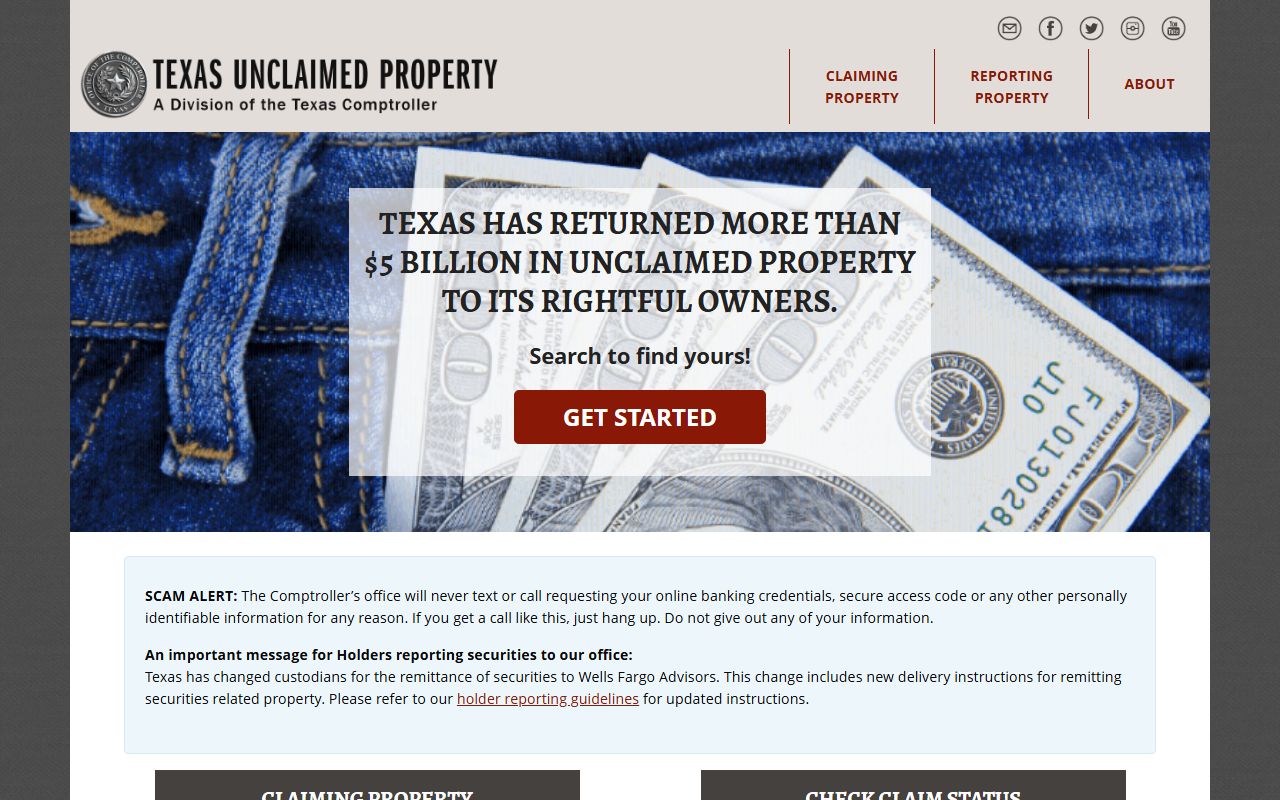
From the results page on ClaimItTexas.gov, you can start a claim right on the site or call the Unclaimed Property Division at 800-321-2274 if you need help.
Once you file a claim, the Comptroller sends a Claim ID to the email address you provide. Use that ID to track your case. The claim status tool lets you check progress at any time without calling or waiting on hold. Status updates are available around the clock online.
The claim status search tool lets you see exactly where your Texas unclaimed money claim stands after you have submitted it.
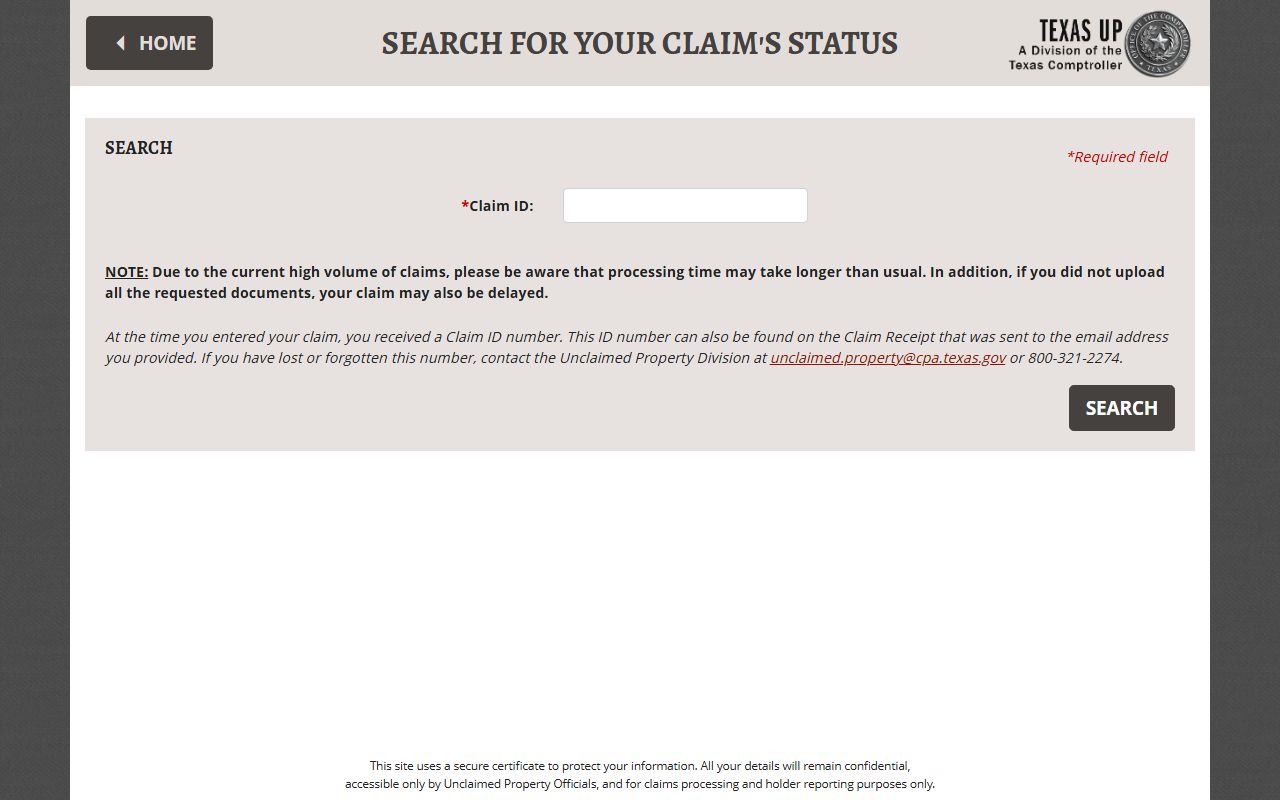
If you lose your Claim ID, contact the division at unclaimed.property@cpa.texas.gov or call 800-321-2274 to get it resent.
Not all unclaimed property ends up in the main state database. Some types go to separate agencies. The Comptroller's databases page lists where to look for pension funds, savings bonds, IRS refunds, HUD homeowner refunds, and Teacher Retirement System of Texas contributions. It also links to the Railroad Commission for unclaimed mineral royalties at 1-877-228-5740, and to county offices for uncashed juror checks.
The alternative databases page covers every type of unclaimed property that falls outside the state's main program, pointing you to the right agency for each one.
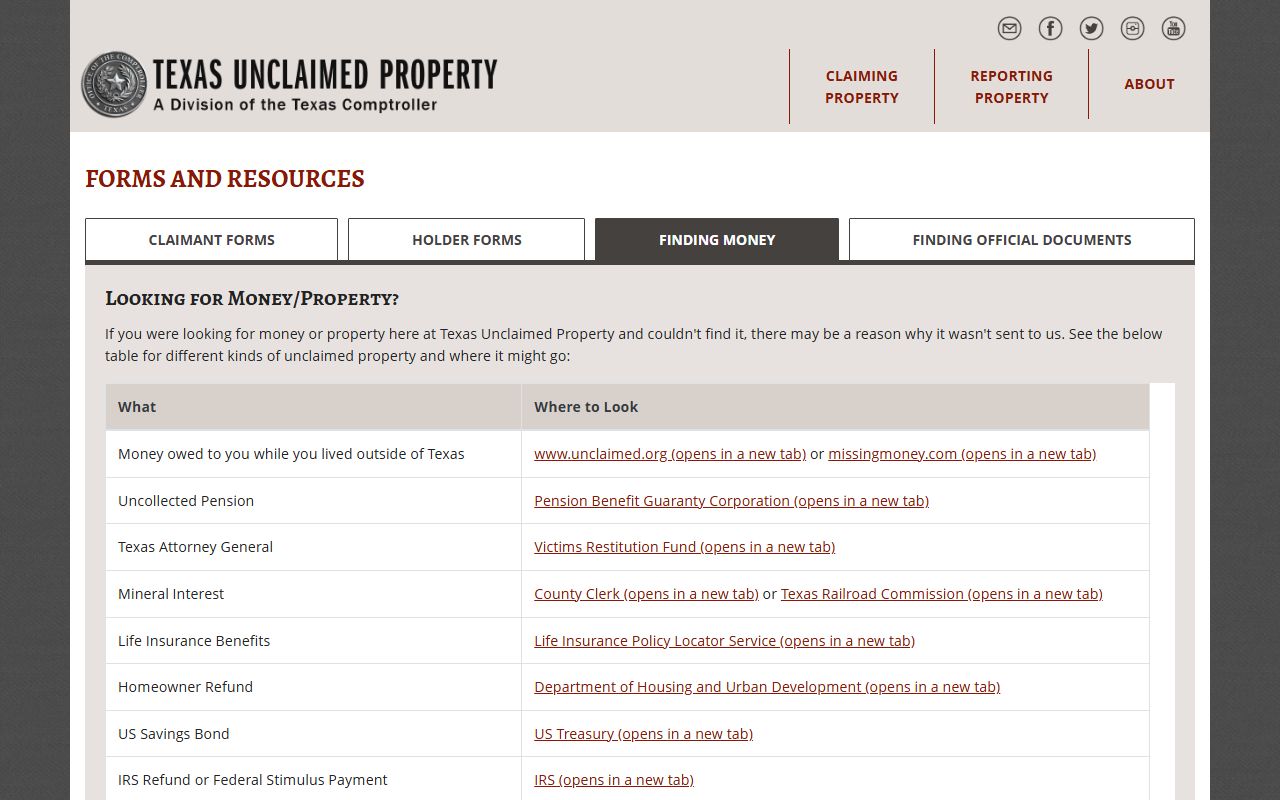
For property that may have been reported to another state, use MissingMoney.com or the national search at unclaimed.org to cast a wider net.
What Types of Property Does Texas Hold
Texas holds unclaimed property from banks, insurance companies, utilities, employers, investment firms, oil and gas companies, schools, and government agencies. The most common types include savings and checking account balances, certificates of deposit, money orders, cashier's checks, dividend checks, and payroll checks that were never cashed. Utility deposits, insurance policy proceeds, annuity payments, court deposits, and trust funds also end up in the program regularly. Under Texas Property Code § 72.101, property is presumed abandoned when the owner's location has been unknown to the holder for three years or more with no activity on the account.
Stocks, bonds, and mutual fund shares can go unclaimed too. If a company pays dividends and the shareholder's address is outdated, the property eventually gets reported to the state. Safe deposit box contents also come in when a box goes unpaid and the bank cannot locate the owner. The Comptroller holds those items until someone claims them. If unclaimed stock is sold before the rightful owner files, the state holds the proceeds plus any dividends that were earned.
Mineral royalties are a major category in Texas. Oil and gas companies must report royalty payments they cannot deliver. These amounts can be large. If you or a family member once owned land with mineral rights in any Texas county, it is worth checking ClaimItTexas.gov even if no payments have ever come before. The Railroad Commission also maintains records of drilling and lease information related to unclaimed mineral interests.
Unclaimed property in Texas does not include real estate or vehicles. The program covers financial assets and personal property only.
The FAQ page covers many common questions about property types, dormancy periods, and what to expect during a claim.
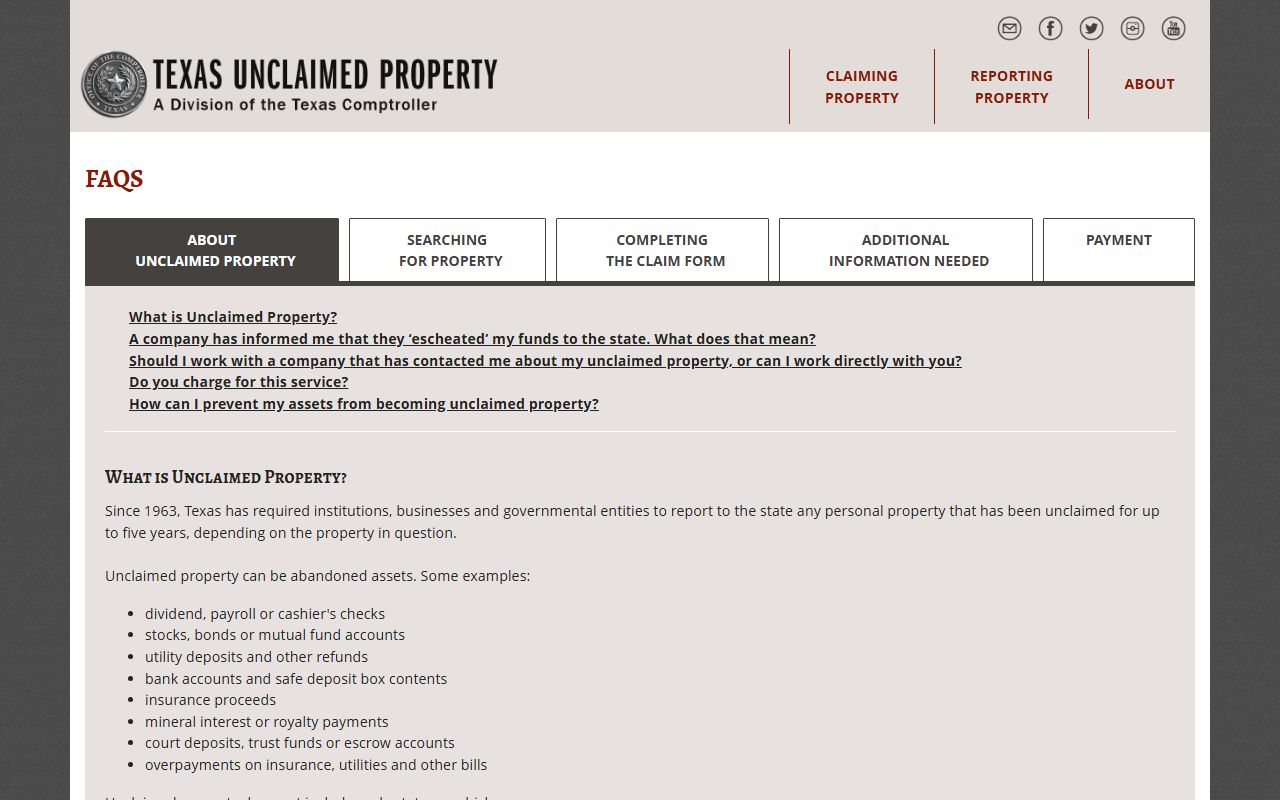
The FAQ page also explains what happens to safe deposit box contents after the required holding period and how stock shares are handled when they reach the Comptroller's office.
Note: Wage and payroll checks have a shorter dormancy period under Texas Property Code § 72.1015. Payroll goes presumed abandoned after just one year, not three.
Filing a Texas Unclaimed Money Claim
Claiming your property is free. The state does not charge anything to file. Once you find a match in the search results, start the claim on ClaimItTexas.gov. You fill out the claim form, select your relationship to the property, and confirm your mailing address. The system will send you a Claim ID right away so you can track progress. Most claims process in 90 days or less, though high-volume periods can cause delays.
The how-to-submit page walks through each step of the filing process in clear detail.
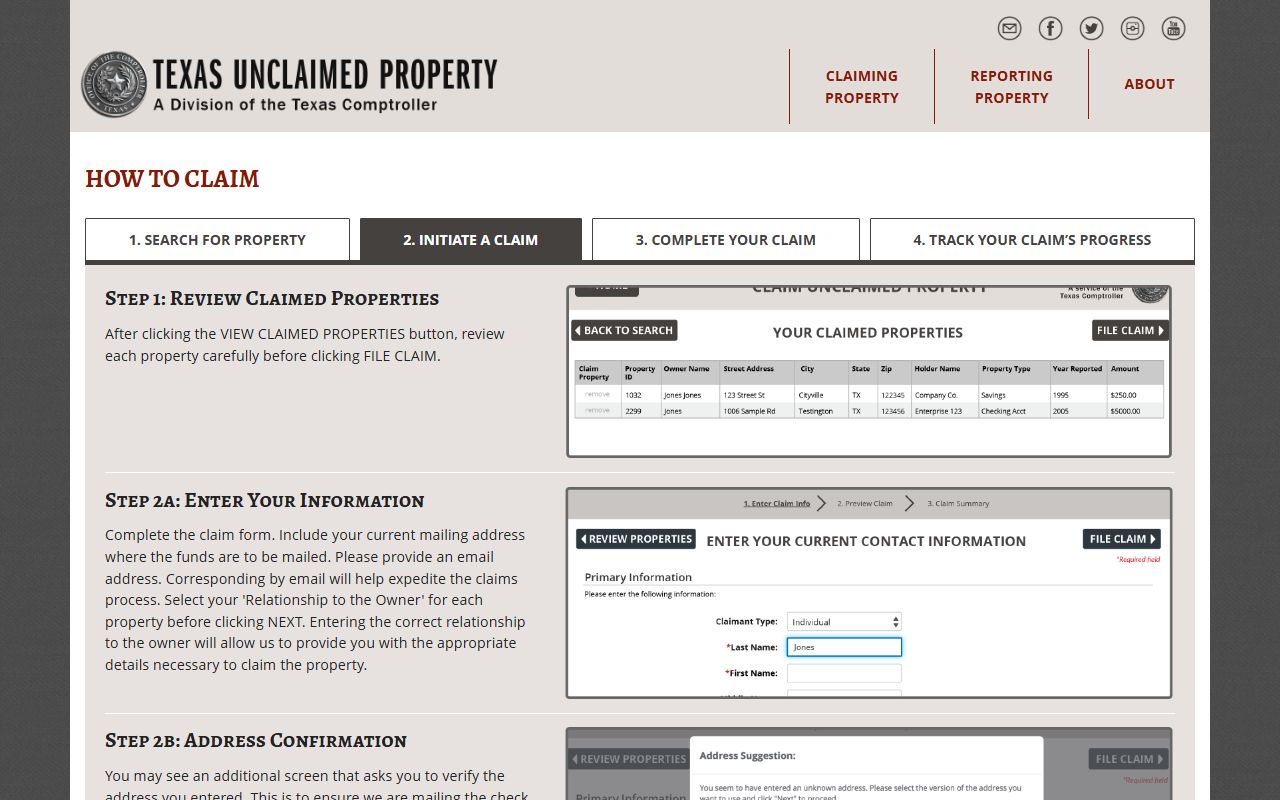
After submitting online, you receive a confirmation email listing your Claim ID and the documents the Comptroller needs to approve the claim. Upload documents through the secure portal on ClaimItTexas.gov. If you prefer mail, send to: Comptroller of Public Accounts, Unclaimed Property Claims Section, P.O. Box 12046, Austin, TX 78711-2046. Use certified mail for any original documents, and know that originals will not be returned unless specifically requested.
The documentation page shows exactly what you need for each property type. For small amounts under $100, a valid photo ID and proof of address are usually enough. Larger claims may require additional paperwork depending on the type of property. The Comptroller provides an interactive tool to help you figure out what you need before you submit.
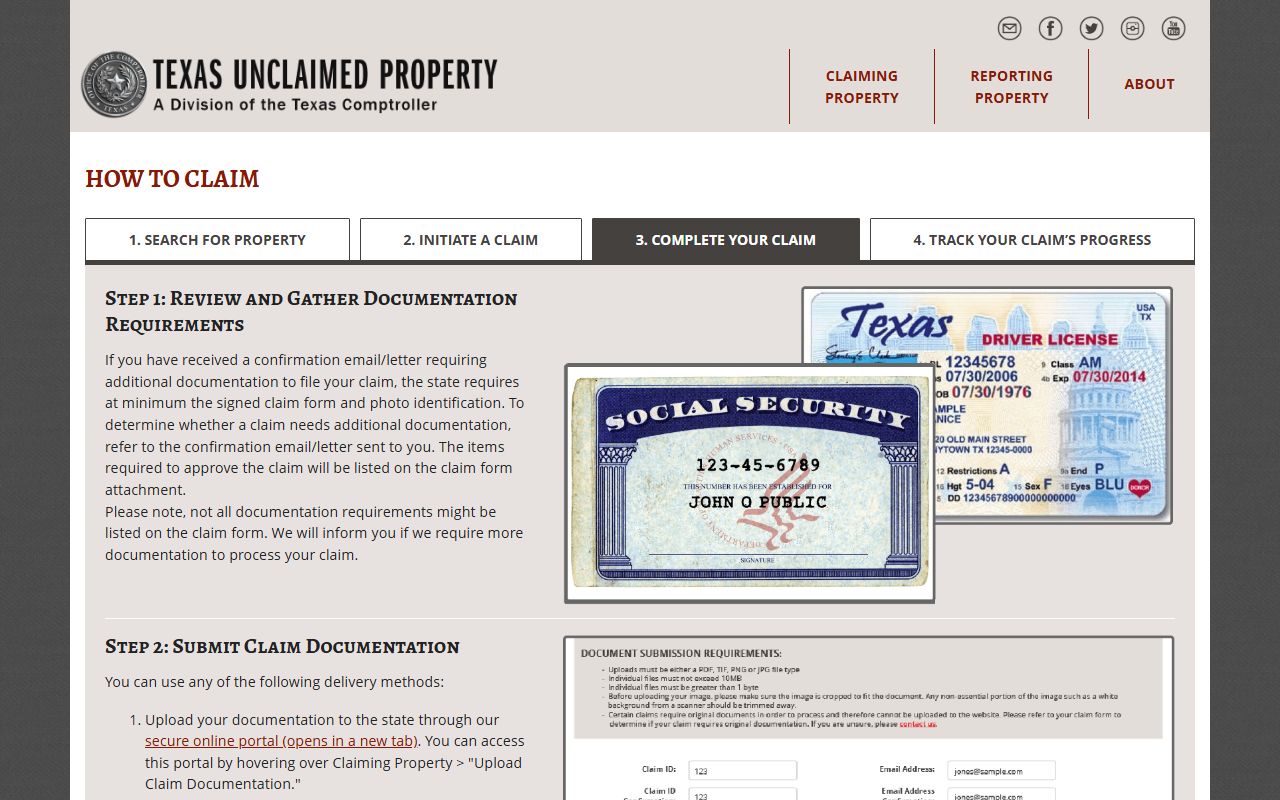
For claims on behalf of a deceased person, you may need an Affidavit of Heirship under Texas Estates Code § 203.001. For complex estates or large sums, a court-issued Determination of Heirship or Probate Court Order may be required. The documentation page spells out exactly what to provide in each situation.
Be careful with locator companies. Texas law caps their fees at 10% of the recovered value. Some companies charge 30 to 40%. You are always better off filing directly with the state for free. Any licensed heir finder or locator must be registered with the Texas Department of Public Safety, Private Security Bureau before they can charge a fee.
The claim completion FAQ answers detailed questions about $0 value listings, what happens to stock the state receives, and what to do if you have trouble with a specific property type.
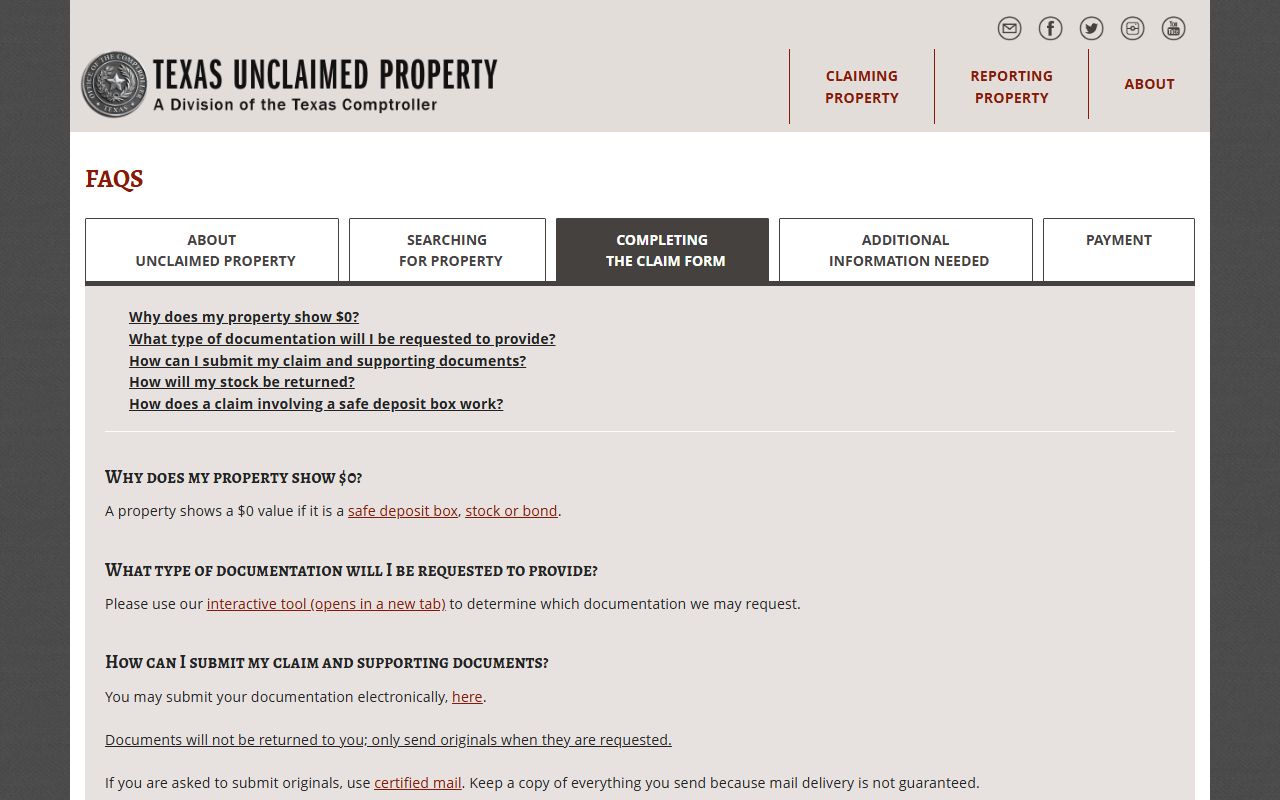
Visit the claim completion FAQ to understand what a $0 value really means and what your options are for each type of property the state holds.
Texas Unclaimed Property Laws
Texas unclaimed property law lives in Title 6 of the Texas Property Code. Chapter 72 covers the abandonment of personal property. Under § 72.101, personal property is presumed abandoned when the owner's location has been unknown to the holder for more than three years with no claim or activity during that time. That three-year rule applies to most property types. Payroll and wages are an exception under § 72.1015, dropping to just one year. Gift cards follow the standard three-year rule under § 72.1016.
Chapter 74 sets out how holders must report property, deliver it to the state, and handle claims. Under § 74.101, holders must file annual reports with the Comptroller by July 1 each year. Chapter 76 governs property held at the county level. Under § 76.201, counties must publish lists of unclaimed property valued at $100 or less. Some county treasurers and auditors hold small amounts locally, separate from the state program.
The statute of limitations on state audits gives the Comptroller seven years from a filed report to begin an examination. But there is no time limit on owners recovering their property. You can file a claim on a 50-year-old account and the state will process it. The program was designed to protect owners, not to keep the money permanently.
The Texas Property Code is available online, showing the full text of Title 6 and all chapters that govern unclaimed money and property in the state.
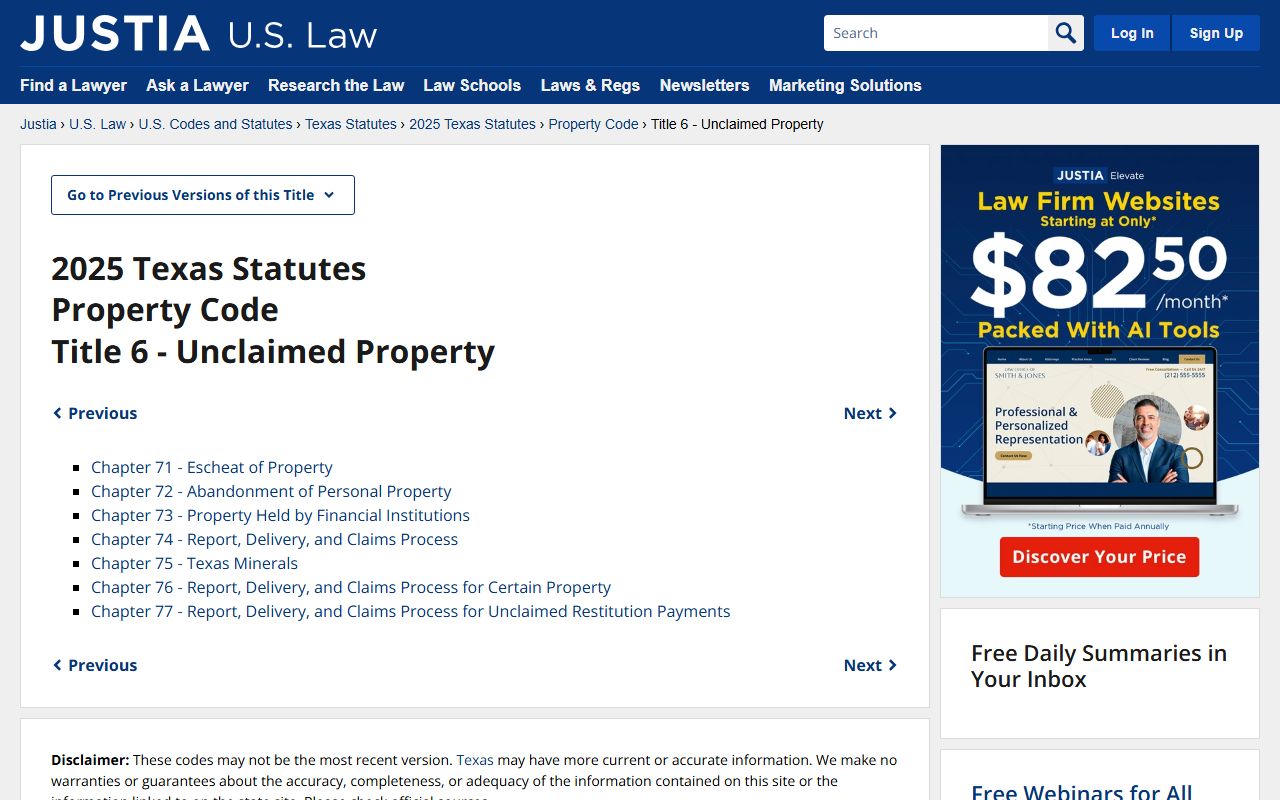
The law at Title 6 covers all aspects of how unclaimed property is defined, reported, held, and eventually returned to its rightful owner in Texas.
Note: The Comptroller can waive penalties for holders that make good faith compliance efforts under § 74.707. Businesses unsure of their obligations can use the Voluntary Disclosure Program to come into compliance before an audit begins.
Holder Reporting: What Businesses Need to Know
Any business or organization that holds property belonging to someone else is a "holder" under Texas law. Holders include banks, insurance companies, oil and gas companies, utilities, securities brokers, mortgage companies, local government entities, and schools. Each must report unclaimed property to the Comptroller once the dormancy period has passed for that property type.
The report year runs from March 2 through March 1. Due diligence letters to owners are due by May 1. Reports and payments must reach the Comptroller by July 1. Holders must keep records for 10 years after reporting. The Comptroller requires all reports to use the NAUPA format. Businesses remitting more than $100,000 must pay electronically through TEXNET.
The holder information page explains what qualifies as unclaimed property and walks through the full reporting process for businesses of all sizes.
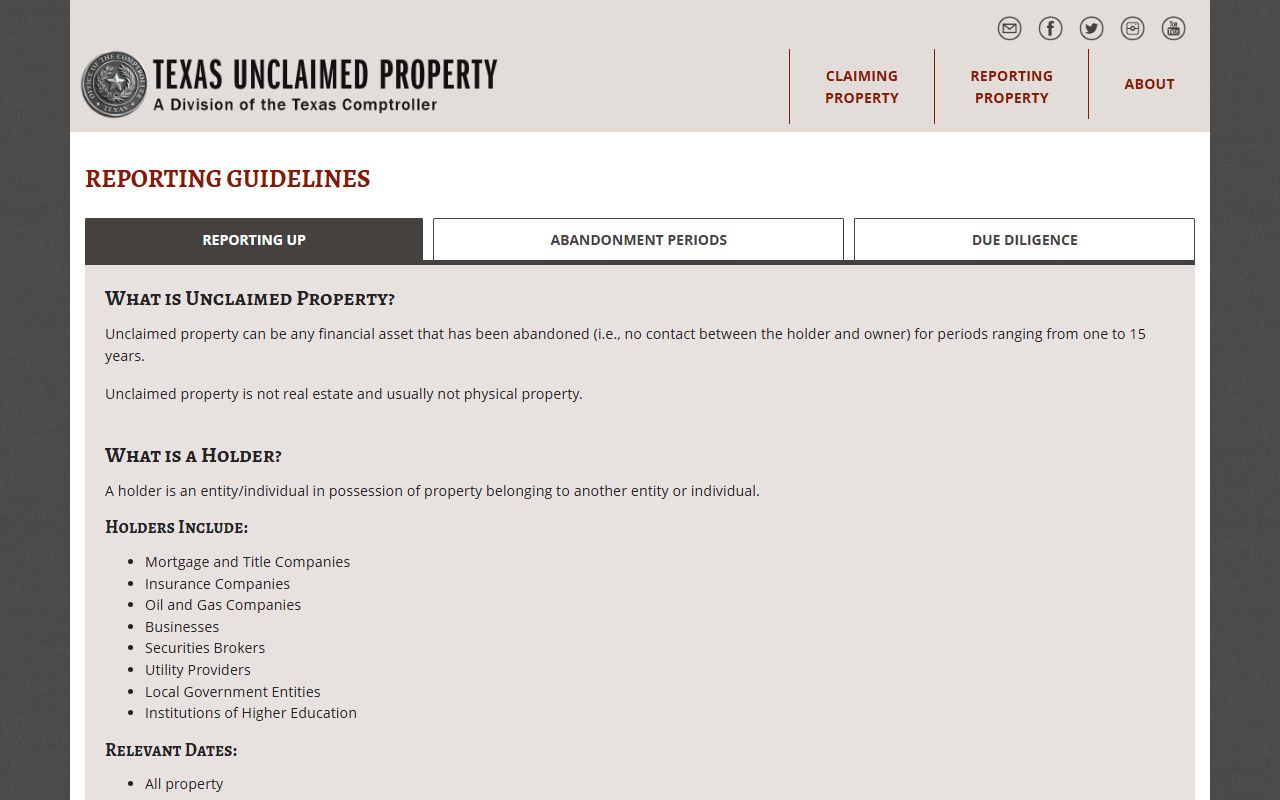
The holder information page covers what types of property each kind of business must report, what NAUPA format means in practice, and how to use the Manual Online Reporting system for smaller reports.
National Unclaimed Money Search Resources
Texas is one of 50 states, and property follows the owner, not just the address at the time of the search. If you lived in multiple states at different points in your life, checking only Texas may not be enough. The national search at unclaimed.org lets you search multiple state databases at once. It is run by the National Association of Unclaimed Property Administrators and covers participating states across the country at no cost.
The NAUPA site connects directly to state unclaimed property programs, including Texas, and is a trusted free resource for residents who have moved around.
Texas is a NAUPA member state, so a search at unclaimed.org will pull in Texas results along with any other states you search. It is a good complement to a direct search at ClaimItTexas.gov.
Another free national resource is MissingMoney.com. It covers many states in a single search and is run in partnership with NAUPA and participating state programs.
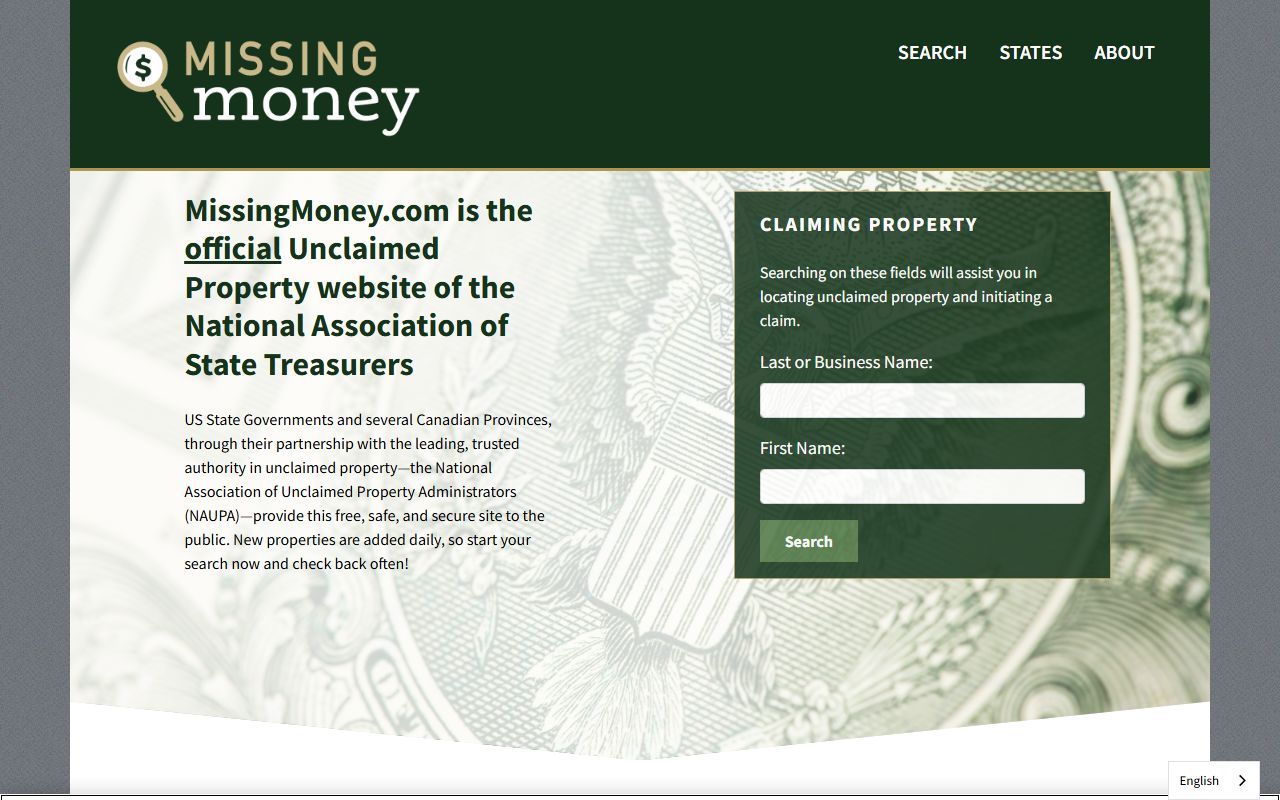
MissingMoney.com is useful if you are looking for property that may have been reported outside Texas or if you want to run a broad search before going to each state's individual site.
Texas also maintains a public transparency database. The Texas transparency data portal has a downloadable listing of unclaimed property records you can browse by name or property type. This data is separate from the ClaimItTexas.gov claim system but covers the same underlying records.
Understanding how Texas enforces holder compliance and what triggers an audit can help businesses and residents alike get a clearer picture of how the program works from end to end.
Note: The Texas Comptroller will never contact you by text or phone asking for online banking credentials, a secure access code, or personal information. Any such contact is a scam.
Contact Texas Unclaimed Property
The Unclaimed Property Division at the Texas Comptroller's office handles all claims and questions. Phone: 800-321-2274 (toll-free). Fax: 888-908-9991. For search and claim questions, email unclaimed.property@cpa.texas.gov. For questions about property auctions, use unclaimed.auction@cpa.texas.gov.
Mailing address for general questions: Unclaimed Property, PO Box 12046, Austin, TX 78711. For certified mail, use the physical address at LBJ Building, 111 E 17th St, Austin, TX 78774. For holder reporting, the mailing address is PO Box 12019, Austin, TX 78711.
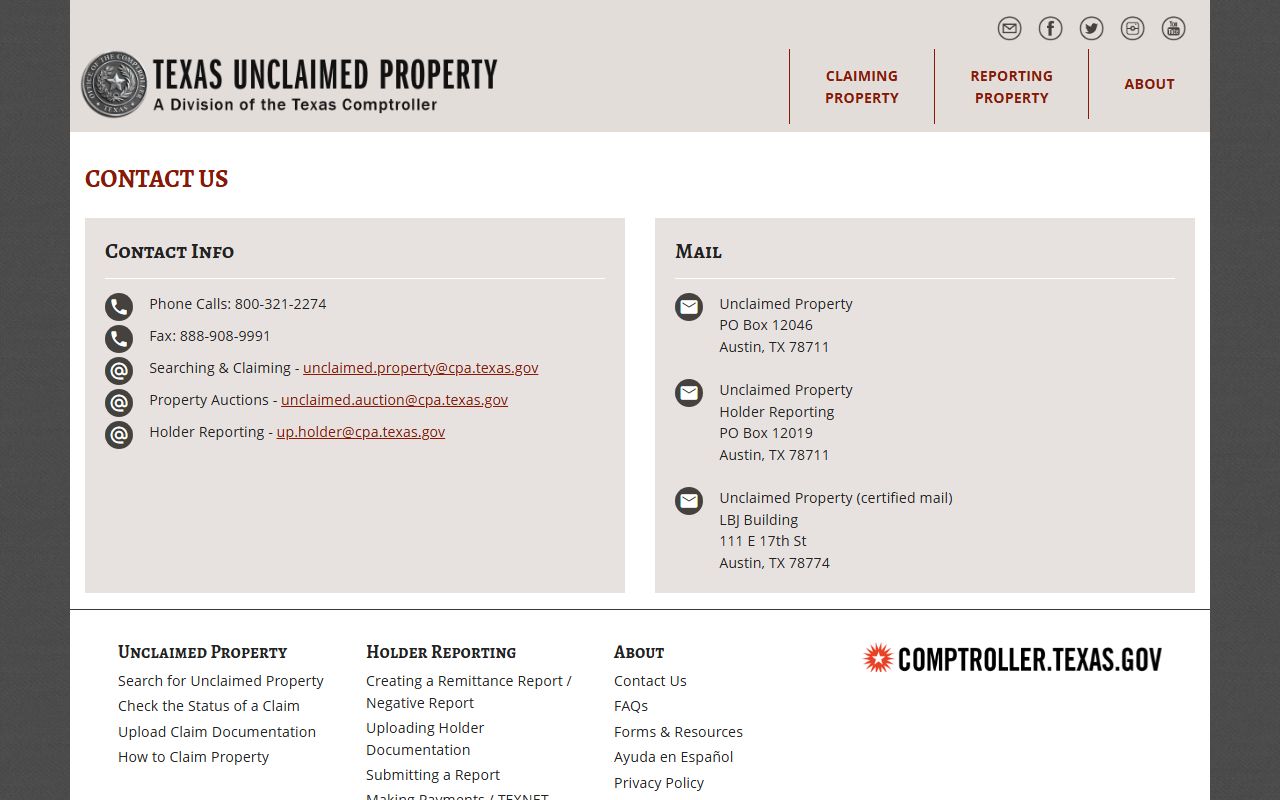
Visit the contact page on ClaimItTexas.gov for updated hours and any changes to contact information. Both English and Spanish language support are available through the main line.
Browse Texas Unclaimed Money by County
Each of Texas's 254 counties has residents and businesses that report unclaimed property to the state. Some counties also hold small amounts locally under Texas Property Code § 76.201. Select a county below to find unclaimed money resources and local contact information.
Find Unclaimed Money by City
Major Texas cities have residents, businesses, and local government entities that all contribute to unclaimed property totals. Pick a city below to find search resources and local county information for that area.