
San Antonio Unclaimed Money
San Antonio residents may have unclaimed money in the Texas state program right now. The Texas Comptroller collects funds from banks, insurance companies, employers, school districts, utilities, and other businesses that could not reach the rightful owner. Everything is searchable for free at ClaimItTexas.gov. This guide walks through the local San Antonio sources, what types of property are most common, and how to file a claim without hiring anyone or paying a fee.
San Antonio Overview
Searching San Antonio Unclaimed Funds
Start your search at ClaimItTexas.gov, the Texas Comptroller's official unclaimed property database. Type in a name and the system searches all property reported by San Antonio-area businesses, government agencies, and financial institutions. The search costs nothing. No login is required. You can look up your own name, a spouse or relative, or any business you have owned or operated.
The San Antonio city government has its own Finance Department at sanantonio.gov/Finance that handles city-level unclaimed funds separately from the state program. These are typically contractor overpayments, permit refunds, and vendor balances that the city collected but could not return. If you have done business with the City of San Antonio and have an outstanding refund or credit balance, contact the Finance Department directly. The city program and the state Comptroller program are not the same database, so checking both is important.
San Antonio Independent School District also has a dedicated unclaimed property page at saisd.net/page/unclaimed-property. SAISD holds funds from vendor payments, employee payroll items, and other school district transactions that could not be delivered. If you or a family member ever worked for SAISD, checking their unclaimed property page separately is a smart step. Under Texas Property Code § 72.101, property is presumed abandoned after three years of no contact, at which point it must be turned over to the state. But SAISD may still hold some items locally before that transfer occurs.
San Antonio is in Bexar County, and many area residents have funds that came from county agencies rather than the city itself. Check the Bexar County page for county-level resources.
San Antonio Local Resources
San Antonio is home to several large institutions that are frequent sources of unclaimed property. Alamo Colleges, the University of Texas at San Antonio, and University Health System all handle large volumes of financial transactions each year. Student refunds, employee payroll balances, vendor credits, and insurance overpayments from these institutions regularly find their way into the state unclaimed property program. If you attended school, worked, or received care from any of these organizations, search under the name you used at that time.
CPS Energy, the city-owned electric and gas utility, is another common source. Utility deposit refunds are among the most frequently unclaimed items statewide. When a customer moves and does not provide a forwarding address, the deposit sits until it becomes presumed abandoned and gets reported to the Comptroller. The same pattern applies to any of the smaller utility providers and cooperative services operating in and around San Antonio.
Joint Base San Antonio is a major military installation encompassing Lackland, Randolph, and Fort Sam Houston. Military pay, allotments, and benefits sometimes go unclaimed due to address changes during deployments or reassignments. Active duty and veteran service members who have been stationed at JBSA should search under any previous addresses used during their service.
The City of San Antonio Finance page is the place to check for funds that the city holds directly before they are transferred to the state program.
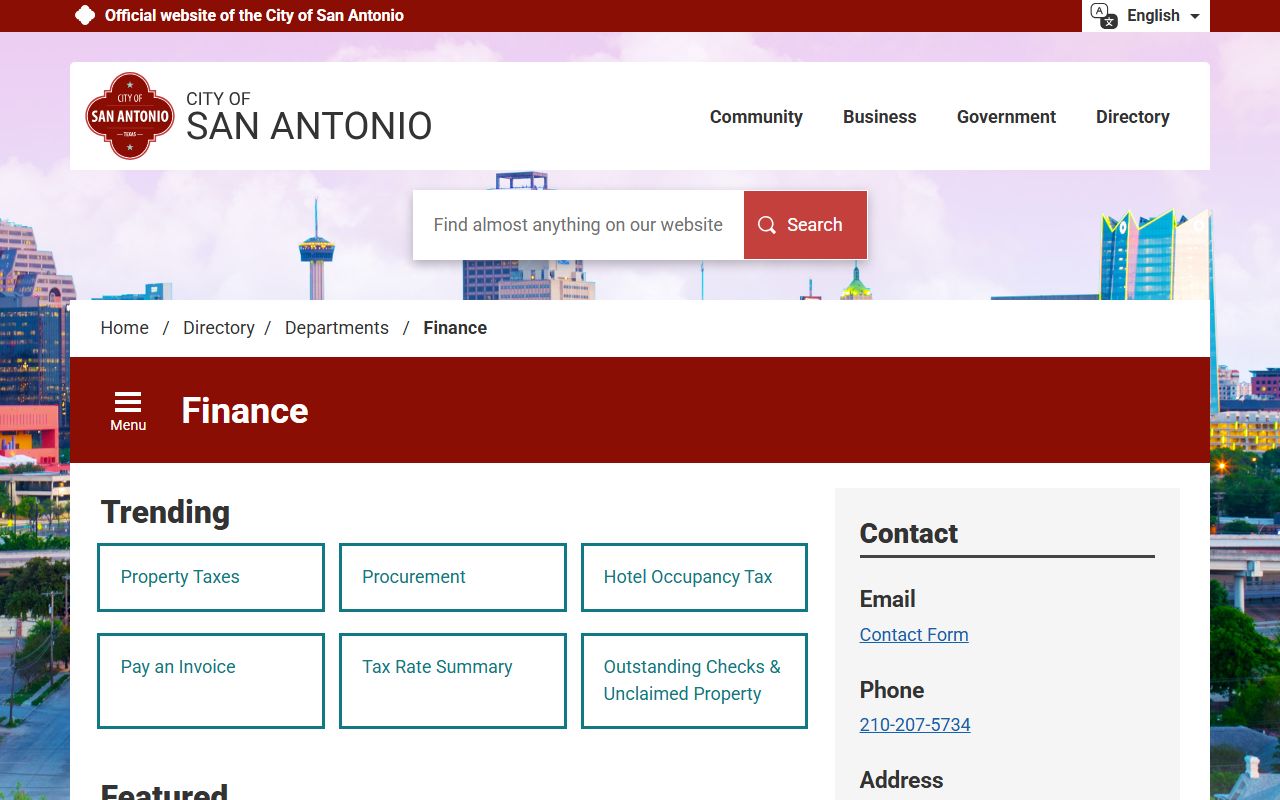
The Finance Department page explains how to request a search for city-held funds not yet transferred to the Texas Comptroller.
Note: Texas Property Code § 72.1015 sets a one-year dormancy period for wages and payroll. Employees who left a San Antonio employer without collecting a final check should search the state database even if it has been a short time since separation.
Types of Unclaimed Property in San Antonio
The types of unclaimed property found in San Antonio reflect the city's major industries and institutions. Military-related payments are more common here than in most Texas cities. Back pay, travel allotments, separation pay, and VA benefit checks all appear in the state database when they cannot be delivered. If you or a family member served at one of the JBSA installations, it is worth running a search under all name variations used during service.
Healthcare-related funds are also a big category. University Health System and the many private hospitals and clinics in San Antonio generate patient account credits, insurance overpayments, and refunds constantly. These amounts are small individually but add up when they go unclaimed. Search under your full name as it appears on your insurance cards and medical records. Sometimes a name in one system does not match how it appears in another, and both versions may appear in the Comptroller's database.
Dormant savings and checking accounts, uncashed insurance checks, and stock certificates are also common. The city has a large retiree population, which tends to mean more unclaimed insurance and pension-related property. If a family member passed away and you are handling their estate, a name search under their full name may turn up funds you did not know existed.
For property types not covered by the main state search, check the alternative databases page on ClaimItTexas.gov. Pension funds, federal savings bonds, and Teacher Retirement System balances each go through different programs.
Filing a Claim from San Antonio
The claim process starts at ClaimItTexas.gov. Find your property in the search results, select it, and follow the on-screen steps. You will get a Claim ID to track your case. Most claims take about 90 days. There is no fee to file.
What documents you need depends on the property type and the amount. Small claims typically require a government-issued photo ID and proof of your current address. Larger claims may require additional items such as insurance policy numbers, employer records, or account statements. The documentation requirements page on ClaimItTexas.gov lists exactly what is needed for each type. Checking that page before you upload anything saves time and prevents delays.
When claiming on behalf of a deceased person, you need to prove your right to the funds. That could mean an Affidavit of Heirship for small estates or full probate documentation for larger ones. The Comptroller's office is experienced with heirship claims and can tell you what they need for your specific situation. Call 800-321-2274 or email unclaimed.property@cpa.texas.gov with questions.
Once your claim is filed, track it using the claim status search tool. The FAQ page covers what happens with $0 value listings, how stocks are handled, and what to do if a claim is denied.
National Search Resources
San Antonio residents who have lived in other states should not limit their search to Texas. Property follows the last known address on file, not your current location. The national database at unclaimed.org searches multiple state programs at once. It is free and run by the National Association of Unclaimed Property Administrators.
MissingMoney.com is another free national tool worth using alongside the Texas search. Both cover different combinations of participating states. Running both takes only a few minutes and could turn up funds from a former employer, school, or bank in another state. The Texas data portal at data.texas.gov also has a downloadable Texas property listing you can filter and search offline if you prefer.

The Comptroller's ClaimItTexas portal covers all Texas-reported property and is the main starting point for any San Antonio unclaimed money search.
Nearby Cities
If you have connections to nearby cities in the San Antonio metro area, check those unclaimed property listings too.