
Search Tyler Unclaimed Money
Tyler residents and former residents may have unclaimed money held by the Texas Comptroller of Public Accounts. Employers, banks, healthcare systems, and insurance companies throughout Tyler and Smith County report dormant accounts and uncollected funds to the state. Christus Trinity Mother Frances Health System is one of the largest employers in East Texas, and the healthcare industry here generates a steady stream of unclaimed patient and employee accounts. Search your name for free at ClaimItTexas.gov to see what the state may be holding for you, and use this guide to understand the key local sources and how to claim your property.
Tyler Overview
Searching Tyler Unclaimed Funds
The Texas Comptroller's free portal at ClaimItTexas.gov is the right starting point for any Tyler resident. Enter your name and the system returns any matching property the state holds. The search is free and does not require an account. Results show the property type, who reported it, and an approximate value. You can also search under a deceased relative's name or a business name to check for property tied to an estate or former company.
Tyler's economy has long been centered on healthcare, education, and the rose industry. Christus Trinity Mother Frances Health System employs thousands throughout Smith County and generates a consistent stream of unclaimed employee payroll and patient account credits. Tyler ISD and Tyler Junior College add significant volumes of payroll and student-related accounts. Under Texas Property Code § 72.101, property is presumed abandoned after three years without owner activity. Wages fall under § 72.1015, which cuts that window to just one year. Any former Tyler employer that owed you a final check may have already reported that amount to the state.
The University of Texas at Tyler also contributes student refunds and employee accounts. Former UT Tyler students or staff should search under the name and address on file during their enrollment or employment period.
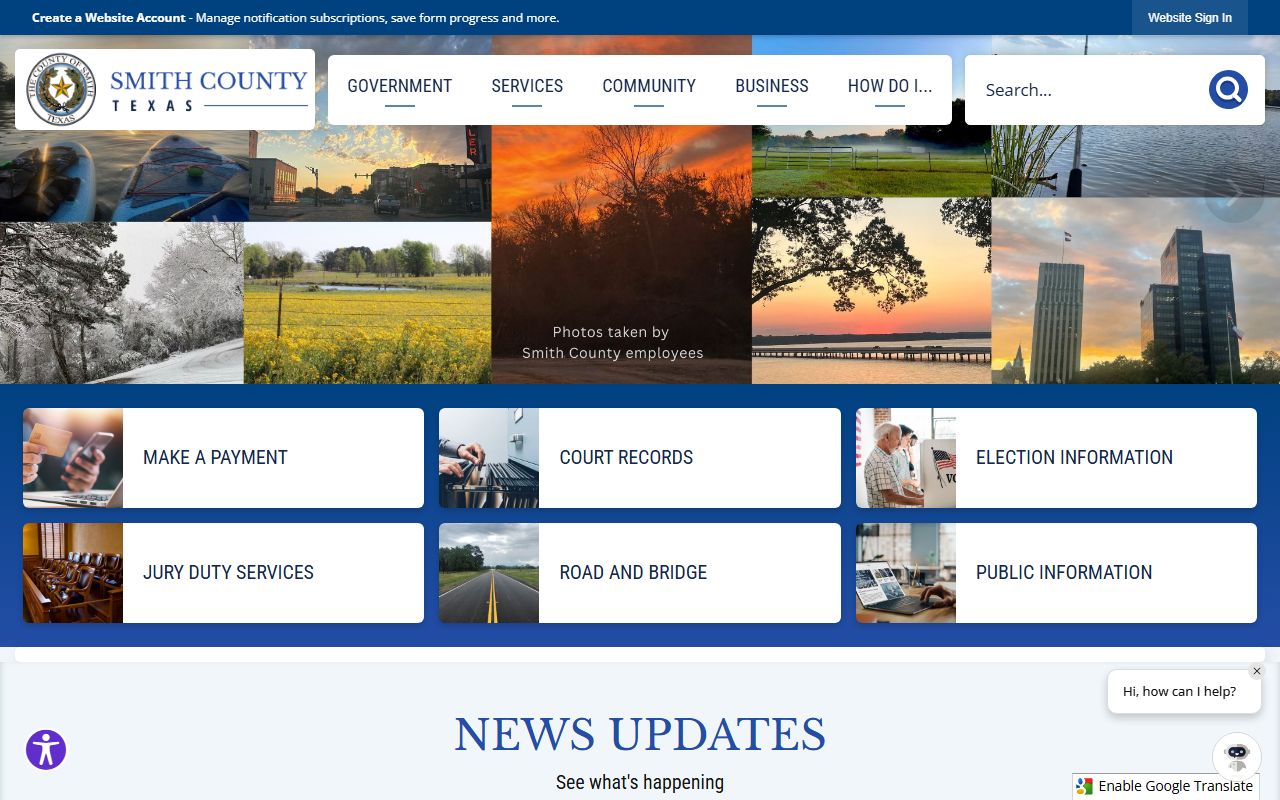
Smith County's official site at smith-county.com is a resource for Tyler residents researching county-level records connected to unclaimed property in the area.
Tyler Local Resources
The City of Tyler finance department at cityoftyler.org manages city-issued payments and municipal accounts. Utility deposits, permit refunds, and overpaid city fees that are not collected may be held at the city level before transfer to the state. Reaching out to city finance directly can resolve amounts that have not yet entered the state program.
Smith County handles property and court records for Tyler. The Smith County unclaimed money page covers county-level details. The Smith County Clerk in Tyler maintains deed records and property filings at smith-county.com. These records are useful if you are tracing unclaimed funds tied to real estate or estate matters in the area. Tyler is the county seat, so all Smith County filings run through the courthouse here.
Tyler Junior College and the University of Texas at Tyler both report student refunds and employee accounts on a regular basis. Former students who had financial aid credits or deposits should search under the name and address on file with the institution when they left. Rose industry employers, though smaller in scale, have also contributed vendor and payroll accounts to the state program over the years. If you or a family member worked in nursery, greenhouse, or related agricultural businesses in Smith County, it is worth checking those employer names in the search portal.
Note: Tyler is the largest city in East Texas and serves as a regional hub. Residents of nearby smaller communities often work or bank in Tyler, meaning accounts from rural East Texas areas can end up reported by Tyler-based institutions.
Types of Unclaimed Property in Tyler
Tyler's healthcare sector is the single largest generator of unclaimed property in the city. Christus Trinity Mother Frances runs multiple facilities and employs a large workforce. Patient account overpayments, insurance reimbursements, and final wage checks from this system regularly enter the state program. If you ever received care at a Tyler-area Christus facility and had a credit balance on your account, search under your name. The same applies if you were an employee who left without an updated direct deposit account on file.
Educational institutions add a second major layer. Uncashed student refund checks from UT Tyler and Tyler Junior College are common. When students graduate, transfer, or withdraw with a credit balance, a check is issued. If it goes uncashed for a year and falls within the one-year wage rule under § 72.1015, it can reach the Comptroller quickly. Old college addresses are often the address on file, so searching under a former address is worth doing.
Dormant bank accounts, insurance policy proceeds, and safe deposit box contents are standard types here as in any Texas city. Tyler has several locally based banks and credit unions. Accounts that go dormant when customers move are a common source. Life insurance proceeds are especially worth checking for families with older members. If a policy beneficiary could not be located after a death, those proceeds sit with the Comptroller indefinitely. The alternative databases page covers pension funds, savings bonds, and IRS refunds held in separate federal programs.
Filing a Tyler Unclaimed Money Claim
Claims are free. Start at ClaimItTexas.gov. Find your property in the search results and follow the steps to submit. The system assigns a Claim ID so you can track the status at any time. Most claims finish in about 90 days.
What you need to submit varies by property type and value. Small claims under $100 usually just need a photo ID and address proof. Larger claims tied to financial accounts or insurance policies may need statements, policy documents, or other records that prove your connection to the property. Check the documentation requirements page before you upload. Submitting the right documents the first time avoids delays and keeps the process moving. For former Tyler employers, a W-2 or pay stub referencing the company and your name is often the simplest proof for wage-related claims.
For claims on behalf of a deceased person, an Affidavit of Heirship is sufficient for many smaller amounts. More complex estates or high-value claims may need formal probate records. Call 800-321-2274 or email unclaimed.property@cpa.texas.gov to confirm what documents are needed before submitting anything complex. Track your claim using the claim status search tool.
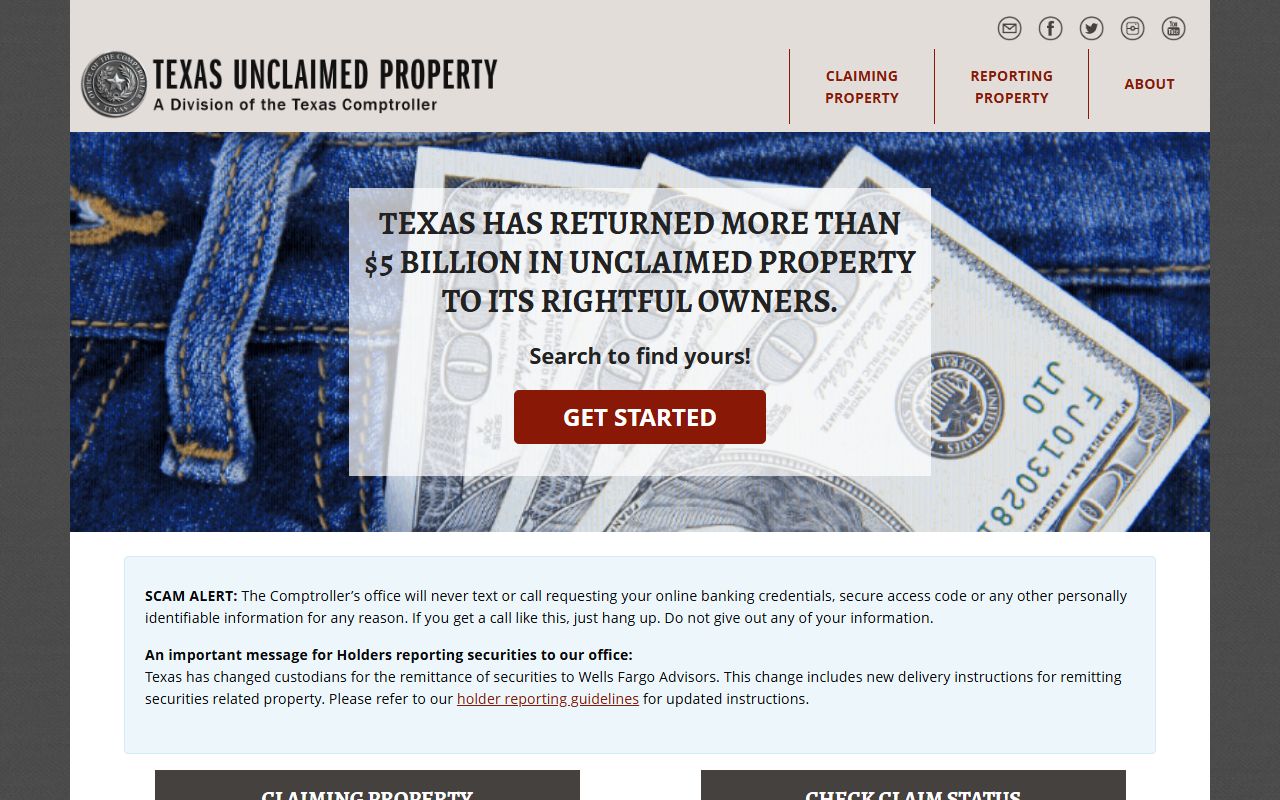
ClaimItTexas.gov is the official free portal for Tyler residents to search and claim unclaimed property held by the Texas Comptroller.
National Search Resources
Tyler draws residents from across East Texas and beyond. If you have lived in other states, check their programs too. Property is reported to the state linked to the last known address on file with the holder, so older accounts from a prior state stay in that state's program. The free national search at unclaimed.org covers multiple state databases at once. MissingMoney.com covers many of the same states. Both tools are free and run by legitimate organizations.
The Texas open data portal at data.texas.gov provides a downloadable version of the Texas unclaimed property listing. The data matches ClaimItTexas.gov but can be filtered and searched offline. This is useful for searching a common last name across all of Smith County or for large family estates with multiple possible entries. The FAQ page answers common questions about $0-value listings, how the state handles physical assets, and what to expect for different claim types.
Nearby Cities
Unclaimed property in Texas is handled at the state level. If you have ties to nearby cities, search those areas as well.