
Find Unclaimed Money in Longview
Longview residents can search for unclaimed money at no cost through the Texas Comptroller's ClaimItTexas.gov portal. The city's oil field industry, health care employers, and educational institutions have all contributed to unclaimed funds in the state program over the years. CHRISTUS Good Shepherd Health System, LeTourneau University, Longview ISD, and Gregg County offices are among the local holders that have reported unclaimed property. This guide covers how to search, which local sources are most relevant, and how to complete a claim.
Longview City Overview
Searching Longview Unclaimed Property
ClaimItTexas.gov is run by the Texas Comptroller of Public Accounts and is the main tool for any Longview unclaimed money search. No account or fee is needed. You type in a name and the system returns any matching records along with the property type, the company that reported it, and an approximate value range. Searches can be run for current residents, past residents, or deceased family members.
Longview is the county seat of Gregg County, which sits in the heart of East Texas oil country. Under Texas Property Code § 72.101, funds are presumed abandoned after three years of no activity or contact. That applies to bank accounts, insurance policies, utility deposits, and investment accounts tied to Longview holders. Oil and gas royalties are a particularly notable source here because the East Texas oilfield has been active for nearly a century, and many old royalty interests have changed hands through inheritance without proper address updates.
Wages are different. Under Texas Property Code § 72.1015, unpaid wages go presumed abandoned after just one year. Former Longview ISD employees, CHRISTUS Good Shepherd staff, and oil field workers who left a job without collecting a final check should search ClaimItTexas now.

ClaimItTexas.gov is the first and most important search tool for Longview residents. After finding a match, start your claim online or call 800-321-2274.
Longview Local Resources
The City of Longview Finance Department at longviewtexas.gov/departments/finance handles city billing, utility accounts, and payroll. Uncollected utility deposits and city-issued refund checks that go undelivered are eventually reported to the Texas Comptroller. If you moved away from Longview without recovering a deposit or collecting a refund check, search for it in the state program.
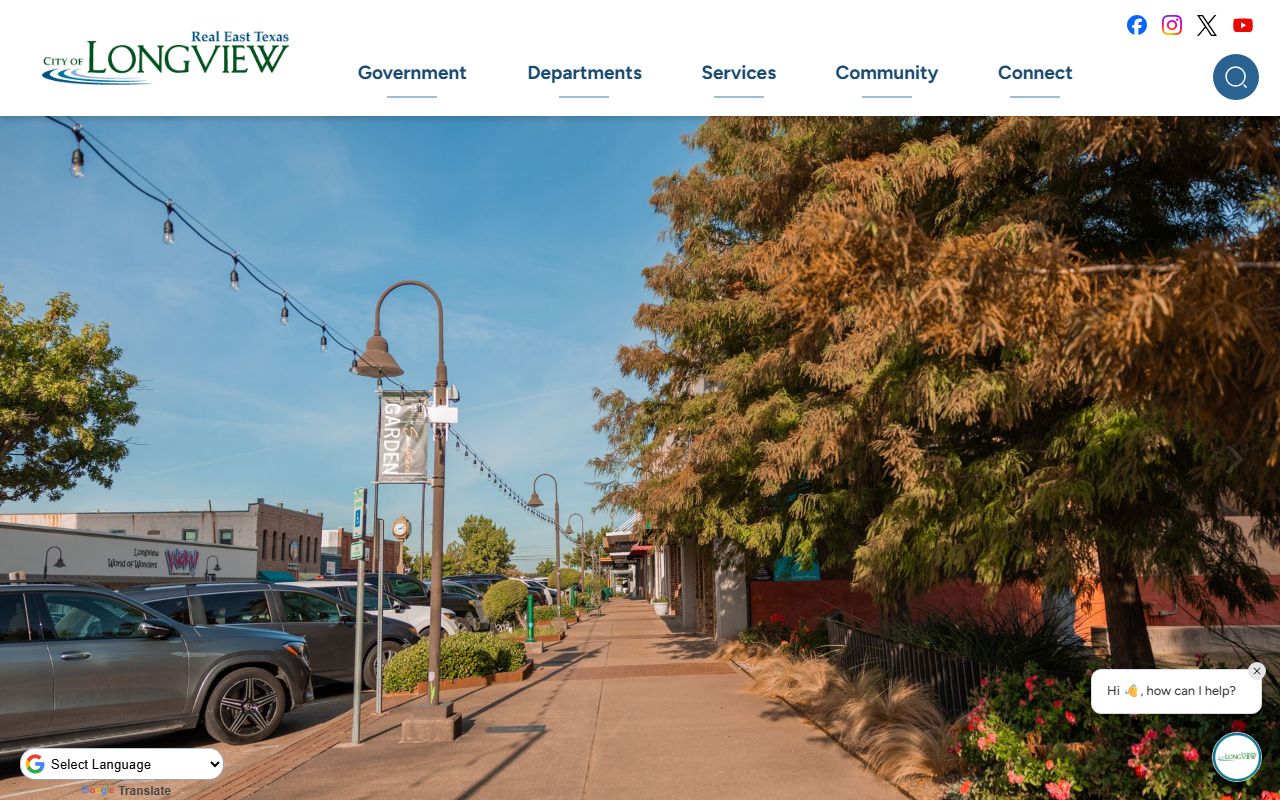
The City of Longview's official site is the right place to find contact information for city departments and local financial offices.
Gregg County government offices, including the county clerk and tax assessor, handle records related to land ownership, mineral interests, and probate matters. If you are tracing a deceased relative's assets in Longview or Gregg County, the county clerk can point you to deed records and mineral filings that connect a name to property that may have generated unclaimed royalties. The Gregg County website at co.gregg.tx.us lists contact information for all county offices.
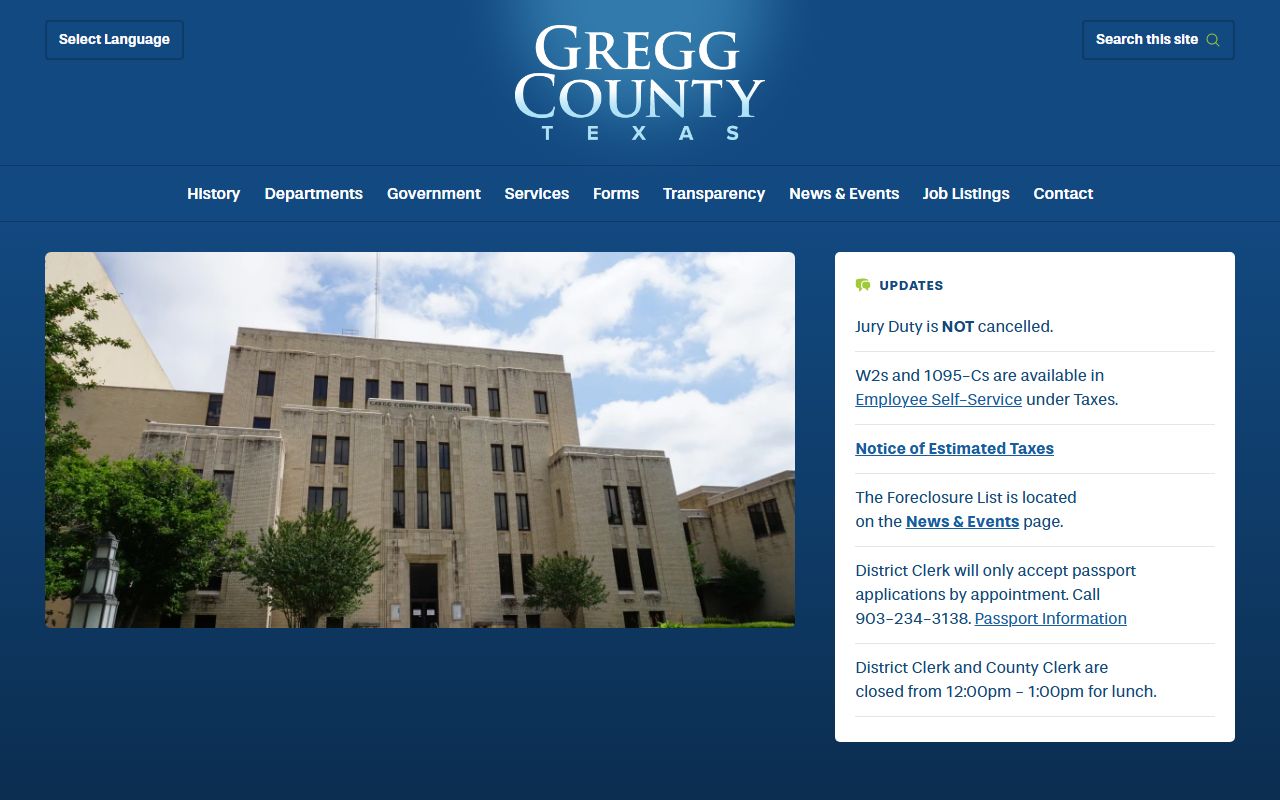
The Gregg County site, shown above, is a useful starting point for tracing mineral interest ownership and connecting family names to property records in the area.
LeTourneau University and Kilgore College serve the area and have both issued student refund checks that went unclaimed in past years. If you attended either school and received financial aid or overpaid tuition, search under your enrolled name. The Texas Railroad Commission at rrc.texas.gov also maintains lease and well records for Gregg County, which can help confirm whether royalties may be owed to your family.
Note: East Texas mineral interests frequently pass through multiple generations without updated deed records. If your family owned land in Gregg County, search under every ancestor's name who may have held a mineral interest.
Types of Unclaimed Property in Longview
Oil and gas royalties stand out as a notable property type in Longview and Gregg County. The East Texas oilfield has been producing since the 1930s, and royalty payments on inherited mineral interests are a common source of unclaimed funds. When a mineral interest owner dies without updating the operator's records, royalty checks start going to the last known address. After three years without contact, the operator reports the balance to the state. Amounts can range from a few dollars to tens of thousands depending on the interest size and production history.
Standard unclaimed types are also common here. Dormant bank accounts, uncashed payroll checks, insurance policy proceeds, utility deposits, and medical billing refunds all appear regularly in the Longview search results. CHRISTUS Good Shepherd Health System is a large employer and health care provider, and refunds from its billing processes sometimes go uncollected when patients move or change insurers.
Safe deposit box contents, court registry funds, and trust distributions also make their way into the state program. The Comptroller holds whatever the reporting company or court turned over. A $0 value in the search results does not mean the item has no value. It means the state holds a physical object rather than cash, and your right to claim it is the same either way.
The alternative databases link on ClaimItTexas.gov covers property types that go to other agencies. Federal pension balances, U.S. savings bonds, IRS refunds, and Teacher Retirement System contributions are all handled by separate programs and require different search tools.
Filing a Longview Unclaimed Money Claim
Claiming your property is free. Go to ClaimItTexas.gov, find your match, select it, and follow the prompts. The system gives you a Claim ID so you can track progress using the claim status search without calling in. Standard claims process in 90 days or less.
Identity verification is required for all claims. For small amounts, a government-issued photo ID and current address proof are usually sufficient. Larger amounts or older accounts may need more. Bank records, lease agreements, employment documents, or prior utility bills can all help establish your connection to the property. Review the documentation requirements page before you upload anything to avoid back-and-forth delays.
Mineral royalty claims from Gregg County can be more complex. If you are claiming on behalf of a deceased relative who held mineral rights, you may need deed records, an Affidavit of Heirship, or a probate court order. The Comptroller's staff handles these regularly and can walk you through the process. Call 800-321-2274 or email unclaimed.property@cpa.texas.gov for guidance before submitting a complex estate claim.
The FAQ page on ClaimItTexas.gov is a solid resource for common questions including what happens when multiple people claim the same property and how the state handles physical assets rather than cash. Check it before calling if your question is about a non-standard property type.
National Search Resources for Longview Residents
Longview residents who have lived in other states should search nationally as well. Unclaimed property stays in the program of the state where the owner's last known address was recorded. If you moved to Longview from Arkansas, Louisiana, or another state, any property reported in that state stays there until you claim it. The free multi-state search at unclaimed.org, run by the National Association of Unclaimed Property Administrators, covers many state databases at once.
MissingMoney.com is another free tool covering multiple states. Neither site charges to search or claim. For Longview residents with family ties across East Texas and neighboring states, running both national tools takes only a few minutes and can uncover funds across multiple programs at once.
The Texas open data portal at data.texas.gov also has a full downloadable Texas unclaimed property listing you can search and filter offline. This is useful when searching multiple family names or comparing results across large data sets outside the main ClaimItTexas portal.
Nearby Cities
All Texas unclaimed property claims run through the same state program. If you have ties to nearby cities, search those names in the same portal.