
Fayette County Unclaimed Property Search
Fayette County residents may have unclaimed money in the Texas state program they have not searched for. The Texas Comptroller holds funds from banks, insurance companies, agricultural businesses, and other institutions across the county that could not locate the rightful owner. La Grange, Schulenburg, Flatonia, and every other Fayette County community fall under the same statewide process. This guide explains where to search for Fayette County unclaimed property, what types of funds are most common in this South Central Texas area, and how to file a free claim through ClaimItTexas.gov.
Fayette County Overview
Search Fayette County Unclaimed Funds
The Texas Comptroller provides a free search at ClaimItTexas.gov for all Fayette County unclaimed money on file with the state. Type in any name to see matching property. No login is needed. You can search your own name, a family member, a former business, or a deceased relative. Results show the property type, the company that reported it, and the approximate value.
Under Texas Property Code § 72.101, most property becomes presumed abandoned after three years without owner contact or activity, and the holder must then report and transfer it to the state. Wages are different. Under § 72.1015, uncashed payroll goes to the Comptroller after only one year. Fayette County's mix of agriculture, manufacturing, and small business employment means both categories apply regularly.
Fayette County has a rich heritage of German and Czech settlement, and multi-generational family land ownership is common. Estate-related searches are productive in counties like this. Old insurance policies, dormant bank accounts, and uncollected mineral interests all surface in these types of searches. Searching under old family names, including married names used in previous decades, increases the chance of finding funds.
The ClaimItTexas portal is the official Texas Comptroller tool for searching Fayette County unclaimed property held by the state.
After finding matching property, start a claim directly on the site or call 800-321-2274 for help from the Unclaimed Property Division.
Fayette County Local Resources
The Fayette County Clerk in La Grange handles official county records including deed filings, mineral leases, and other property instruments. If you need to trace land or estate ownership as part of an unclaimed property search, the clerk's office is the right starting point. Call 979-968-3251 or visit co.fayette.tx.us.
The Texas Railroad Commission at rrc.texas.gov maintains oil and gas well and lease records for Fayette County. If your family owned land with mineral interests in the area, RRC records can help identify what operators were active and what leases existed. That is useful when searching the Comptroller's database for unclaimed royalties tied to those operators' names. Fayette County is not a major oil producing area, but lease bonuses and royalties from exploratory activity have contributed to the state program over the years.
The official Fayette County website provides contact information for the county clerk and other offices that handle local property and official records.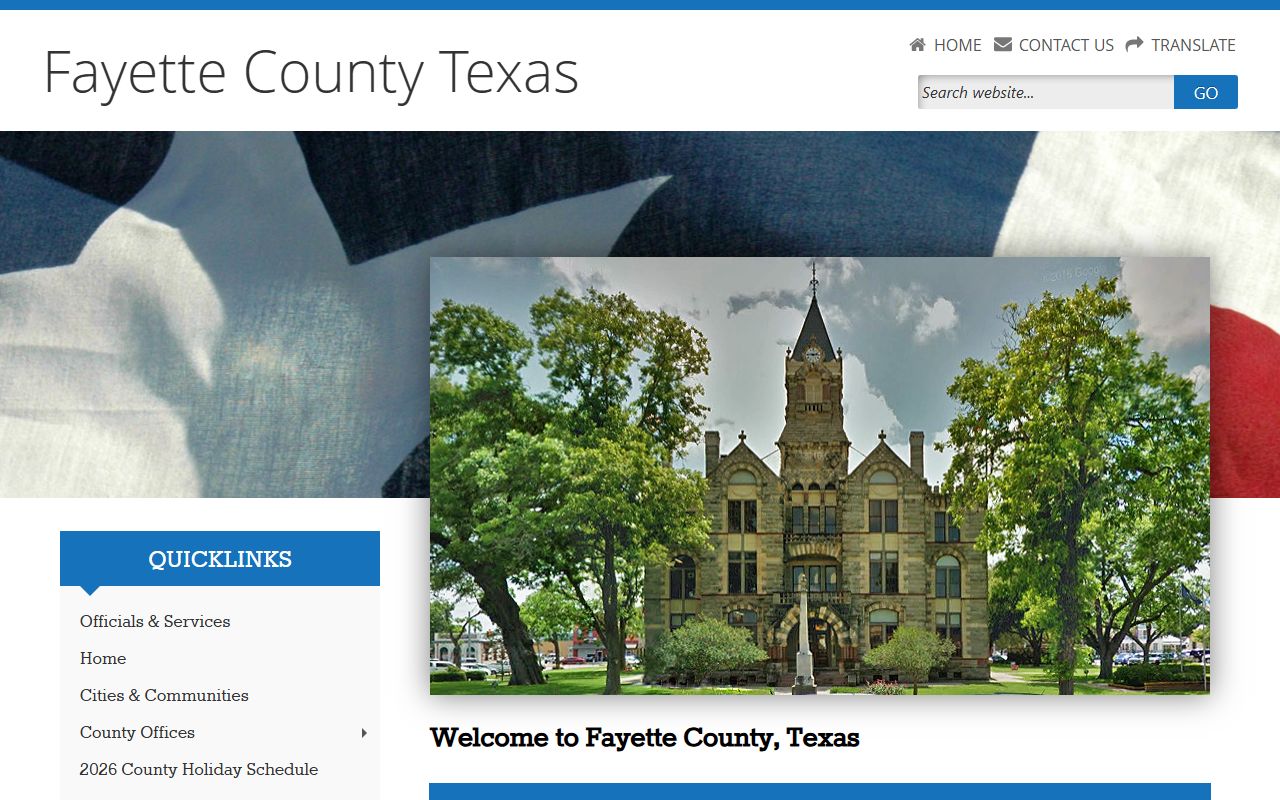
The courthouse in La Grange holds deed and property records going back many generations, which supports estate and ownership research connected to unclaimed fund searches.
Texas Property Code Chapter 76 addresses small locally held unclaimed property that may apply to Fayette County amounts under $100.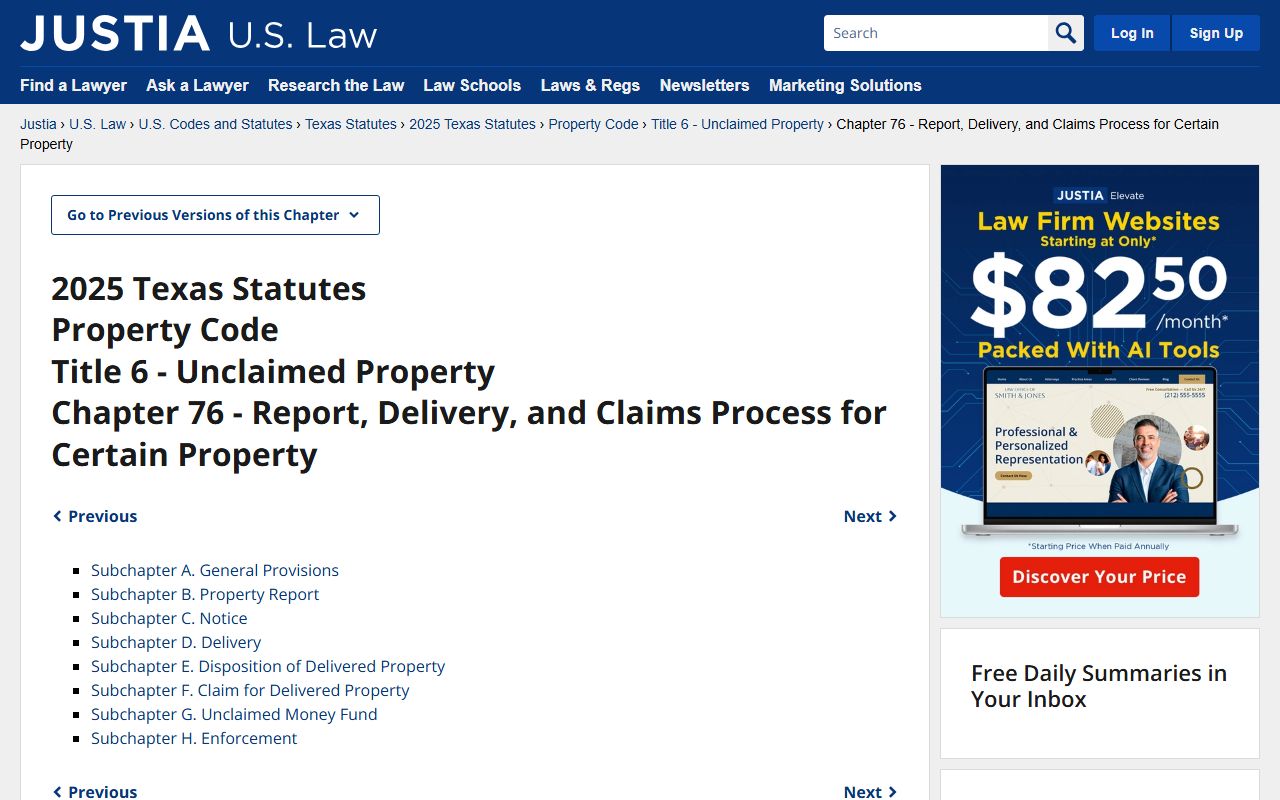
Under § 76.201, Fayette County may hold small unclaimed amounts of $100 or less separately from the state program. Contact the county treasurer to ask about any locally held balances in your name.
Types of Unclaimed Property in Fayette County
Dormant bank accounts are the most common unclaimed property type statewide and in Fayette County. Accounts at local La Grange and Schulenburg banks that see no activity for three years, with the institution unable to reach the owner, are reported to the Comptroller. Savings accounts, checking accounts, old CDs, and money market balances all qualify. Even small amounts are included and can be claimed at no cost.
Agricultural payments are a meaningful source in Fayette County. Co-op distributions, crop insurance checks, and USDA program payments sometimes fail to reach the intended recipient when addresses are out of date or when a farm operation was dissolved. If a family farming entity was wound down years ago without formal settlement, old business accounts may still carry balances. Searching under the entity name alongside individual family names is worth the extra time.
Life insurance proceeds are one of the most valuable categories for families with long roots in Fayette County. Older policies held by grandparents or great-grandparents may never have been claimed after their death. Insurers report unclaimed proceeds to the state after the dormancy period, and the Comptroller holds them without any expiration. There is no deadline to file a claim, so estate searches going back decades can still produce results.
For property not in the main program, the alternative databases page on ClaimItTexas.gov points to pension fund administrators, IRS refunds, federal savings bonds, and Teacher Retirement System accounts. Each has a separate claim process, and the page links to each one directly.
Filing a Fayette County Unclaimed Money Claim
Claims are free. Start at ClaimItTexas.gov. Search your name, select the property, and follow the steps. A Claim ID is issued for tracking. Most claims finish within 90 days.
Small claims under $100 need a photo ID and proof of current address. Larger claims require additional documentation based on property type. The documentation requirements page has a full breakdown by category. Check it before uploading to avoid unnecessary delays. Heir claims for deceased relatives require an Affidavit of Heirship or court documents. Call 800-321-2274 or email unclaimed.property@cpa.texas.gov for help with complex cases. Track your case at the claim status page. The FAQ answers common questions about stock, $0 values, and processing timelines. Texas law caps locator fees at 10% of recovered amounts, and you can always file for free directly.
National Search for Fayette County Residents
If your family ever lived in other states, check those programs too. The free national search at unclaimed.org queries multiple state databases at once. MissingMoney.com covers many states for free. Both are legitimate and do not charge to search or claim. The Texas open data portal at data.texas.gov has a downloadable file of all Texas unclaimed property records that can be searched offline for multiple names at once.
Nearby Counties
All Texas residents use the same statewide unclaimed property program. Search neighboring counties if you have connections there.