
Crosby County Unclaimed Funds
Crosby County residents may have unclaimed money held by the Texas Comptroller right now. The state program collects funds from banks, insurance companies, utility providers, and employers across Crosby County when they cannot locate the rightful owner. Crosbyton, Ralls, Lorenzo, and every other part of the county fall under the same statewide system. This guide covers where to search, what types of property turn up most often in this part of the Texas Panhandle, and how to file a claim at no cost through ClaimItTexas.gov. The search is free, and the Comptroller does not require you to hire anyone to get your money back.
Crosby County Overview
Find Crosby County Unclaimed Money
The Texas Comptroller of Public Accounts runs the state unclaimed property program through ClaimItTexas.gov. This is the main place to search for Crosby County unclaimed funds. Enter any name, and the system returns matching property on file. You can search your own name, a spouse's name, a business name, or the name of a deceased family member. No account or login is needed, and the search costs nothing.
Under Texas Property Code § 72.101, most property types go presumed abandoned after three years without owner contact or account activity. At that point, the holder must report and deliver the funds to the Comptroller. Payroll and wages have a shorter window. Under § 72.1015, unclaimed wages go to the state after just one year. If you left a job in the Crosbyton area without getting a final check, that money may already be in the program.
The ClaimItTexas portal is the first stop for anyone looking for Crosby County unclaimed property. Results show the property type, approximate value, and the name of the company that reported it.
The ClaimItTexas.gov portal shows all Crosby County unclaimed property held by the Texas Comptroller.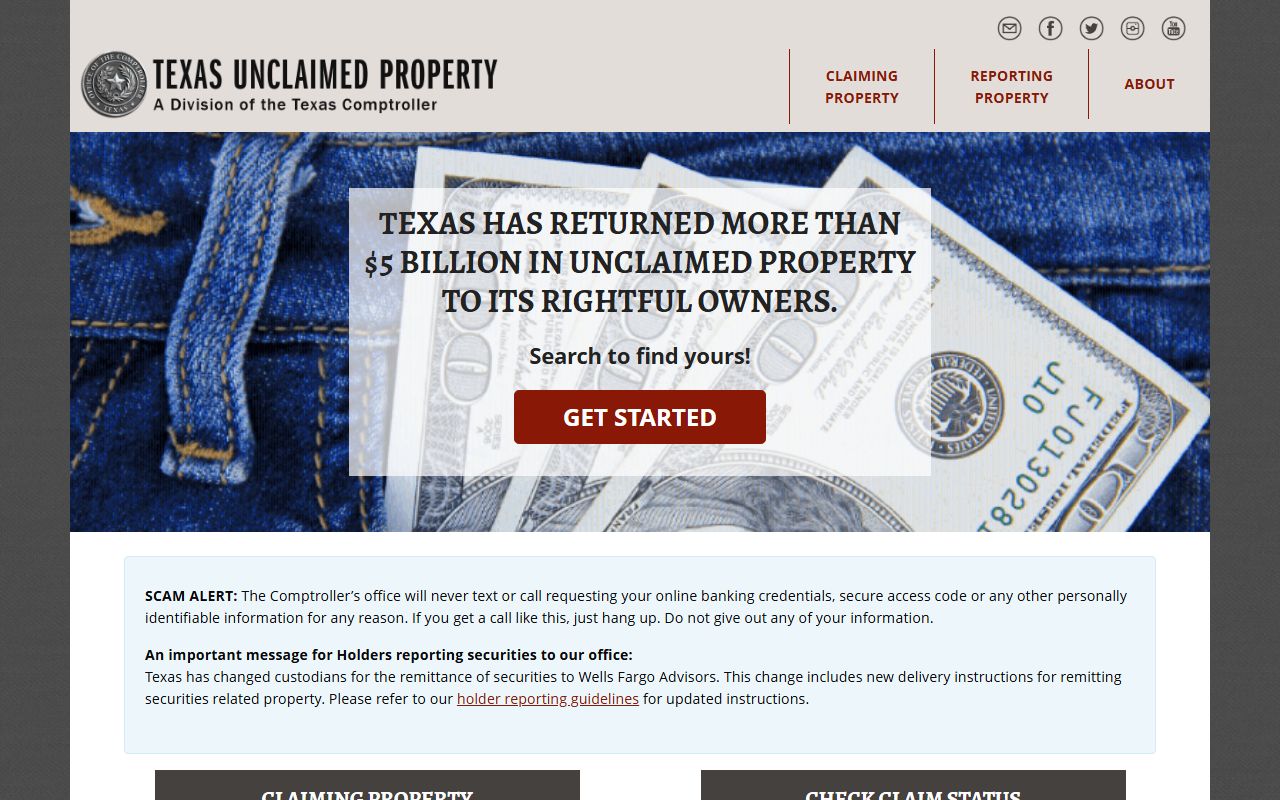
Once you find a match, you can begin the claim directly on the site or call 800-321-2274 for help from the Unclaimed Property Division.
Crosby County Local Resources
The Crosby County Clerk's office in Crosbyton is the local hub for official county records. If you are researching unclaimed property tied to land ownership or mineral rights in the county, the clerk's office is a useful starting point. The county maintains records of deeds, leases, and other instruments that can help trace who held property rights and when. Reach the county at 806-675-2334 or visit co.crosby.tx.us.
Crosby County has an agricultural base, and farming operations often generate unclaimed funds. Co-op payments, crop insurance proceeds, and FSA payments that go undelivered can all end up in the state program over time. If a farming operation in the family closed or changed hands years ago, it is worth searching under the old business name as well as individual names. Accounts tied to dormant farm partnerships or small ag businesses sometimes sit in the system unclaimed for years.
The official Crosby County website provides contact details for the County Clerk and other local offices.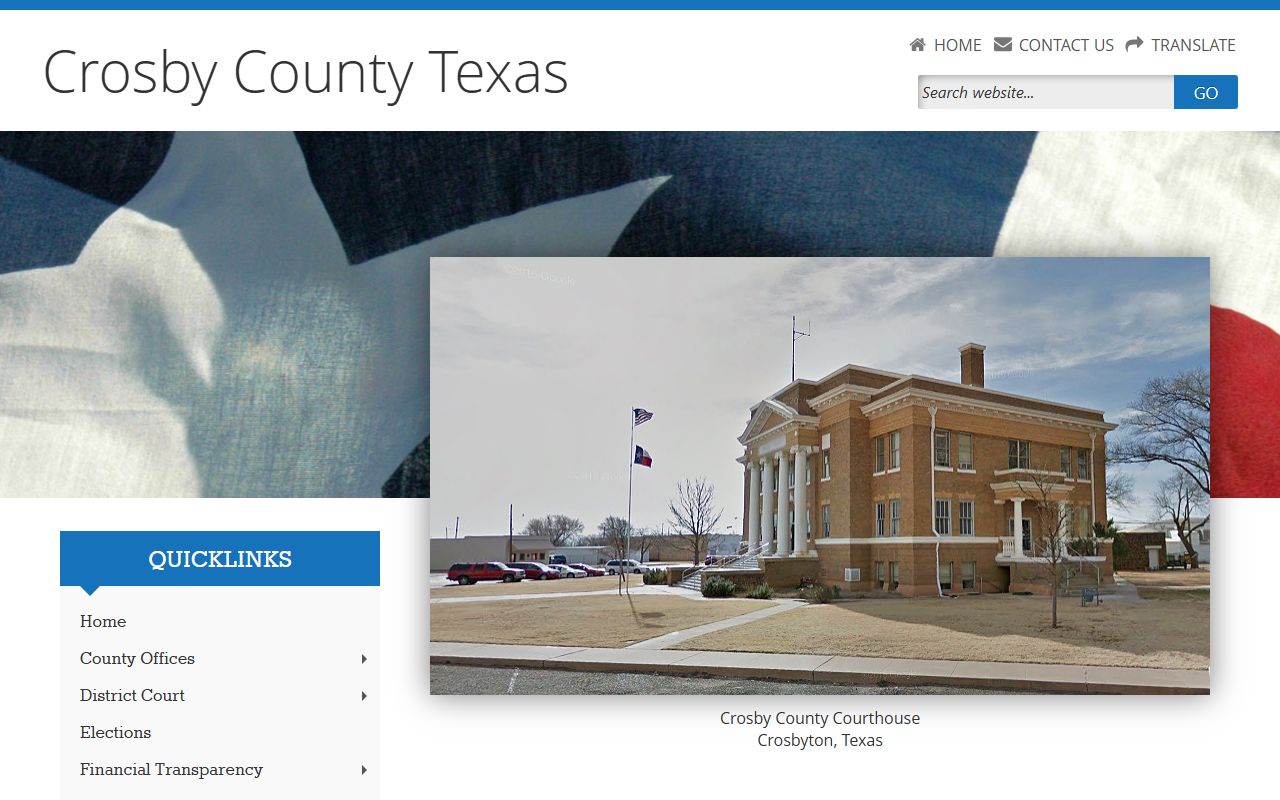
The county seat of Crosbyton is home to the courthouse where the County Clerk records deeds and other instruments that can help you track property ownership history in the area.
Note: Under Texas Property Code § 76.201, Crosby County may hold small unclaimed property amounts of $100 or less separately from the state program. Contact the county treasurer's office if you believe a small balance may be held locally.
Types of Unclaimed Property in Crosby County
Crosby County residents can have the same range of unclaimed property types as any other Texas county. Dormant bank accounts are among the most common. An account with no activity for three years, and no response to the bank's last contact attempt, gets reported to the state. Utility deposits are another frequent source. If you moved away from a Crosbyton or Ralls address and never collected a deposit refund, that amount may be in the program.
Payroll checks that went uncashed are common too. Employers report these after one year, which is a much shorter window than most people realize. Life insurance policy proceeds also show up often. If a family member passed away and the beneficiary never filed a claim, the insurance company will eventually report those funds to the state. The value can be significant, especially for older whole-life policies.
Stock dividends, brokerage accounts, and mutual fund balances make up another category. People who moved away from Crosby County and did not update their addresses with financial institutions often have funds reported in their old names. Searching former addresses alongside your current name can surface these matches.
The Comptroller's alternative databases page lists property types that go to separate agencies rather than the main state program. That includes pension fund benefits, federal savings bonds, IRS refunds, and Teacher Retirement System balances. Each has its own claim process, and ClaimItTexas.gov points you to each one.
Filing a Claim for Crosby County Unclaimed Funds
The claim process starts at ClaimItTexas.gov and costs nothing. Find your name in the search results, select the property, and follow the steps on screen. The system gives you a Claim ID you can use to track the status of your case. Most claims process within 90 days.
You will need to show who you are and that you are the rightful owner of the property. Small claims under $100 usually need only a government-issued photo ID and proof of your current address. Larger claims may require additional documents depending on what type of property it is. The documentation requirements page on ClaimItTexas.gov has a breakdown for each property type. Check this before uploading to avoid delays.
If you are filing on behalf of a deceased person, you may need an Affidavit of Heirship or a court-issued document establishing your right to the estate. The Comptroller's staff handles heir claims regularly and can walk you through the steps if you call 800-321-2274 or email unclaimed.property@cpa.texas.gov.
After you submit, use the claim status tool to follow your case online without calling. The FAQ page covers common questions about what to do when a value shows as $0, how stock shares are handled, and what timelines to expect. Do not pay a third party more than 10% of the recovered amount. Texas law caps locator fees at that level, and you can always file directly at no cost.
Search Nationally from Crosby County
If you or your family lived in other states before settling in Crosby County, search those states too. Unclaimed property follows the owner's last known address, so funds reported in another state stay in that state's program. The free national search at unclaimed.org, run by the National Association of Unclaimed Property Administrators, covers multiple state databases in one search.
MissingMoney.com is another free national tool that pulls results from many participating states at once. Both sites are legitimate and do not charge to search or claim. For Crosby County residents who worked in neighboring states or had family in the Midwest, these tools can surface accounts you might not find through ClaimItTexas.gov alone.
The Texas open data portal at data.texas.gov has a downloadable file of unclaimed property records. You can search and filter this data offline, which is useful if you want to look up multiple names at once or review a large family estate.
Nearby Counties
Unclaimed property claims are handled at the state level regardless of which Texas county you are in. If you have ties to neighboring counties, search those areas too.