
Coleman County Unclaimed Money
Coleman County residents and former residents may have unclaimed money held by the Texas Comptroller. Banks, employers, insurance companies, and utilities in and around the city of Coleman report dormant accounts and uncashed checks to the state program each year. The funds stay with the Comptroller indefinitely until the rightful owner comes forward. Search at no cost through ClaimItTexas.gov to see if your name appears in the database, and use this guide to understand the claim process and the types of property most commonly reported from this area.
Coleman County Overview
Searching Coleman County Unclaimed Funds
The Texas Comptroller's ClaimItTexas.gov is where you begin. Enter a name and the system searches all property reported from businesses statewide, including Coleman County. No account is required. The search is free. You can look up your own name, a former business, or a deceased relative.
Under Texas Property Code § 72.101, accounts and other property that go three years without owner contact are presumed abandoned. The holder must then report and transfer those funds to the Comptroller. Coleman County's mix of ranching and agricultural employers, local banks, and small businesses contributes to the state program each year. There is no deadline to claim. The Comptroller holds everything until you come forward.

Results from the portal show the property type, approximate value, and the company that filed the report. Start a claim from the results or call the Comptroller at 800-321-2274.
Coleman County Clerk and Local Offices
The Coleman County Clerk in Coleman maintains deed records, mineral lease filings, and other official instruments for the county. If you are tracing inherited land or mineral interests, the clerk's office is the right place to start. Reach the county at 325-625-2714. The county website at co.coleman.tx.us lists contact details for all offices.
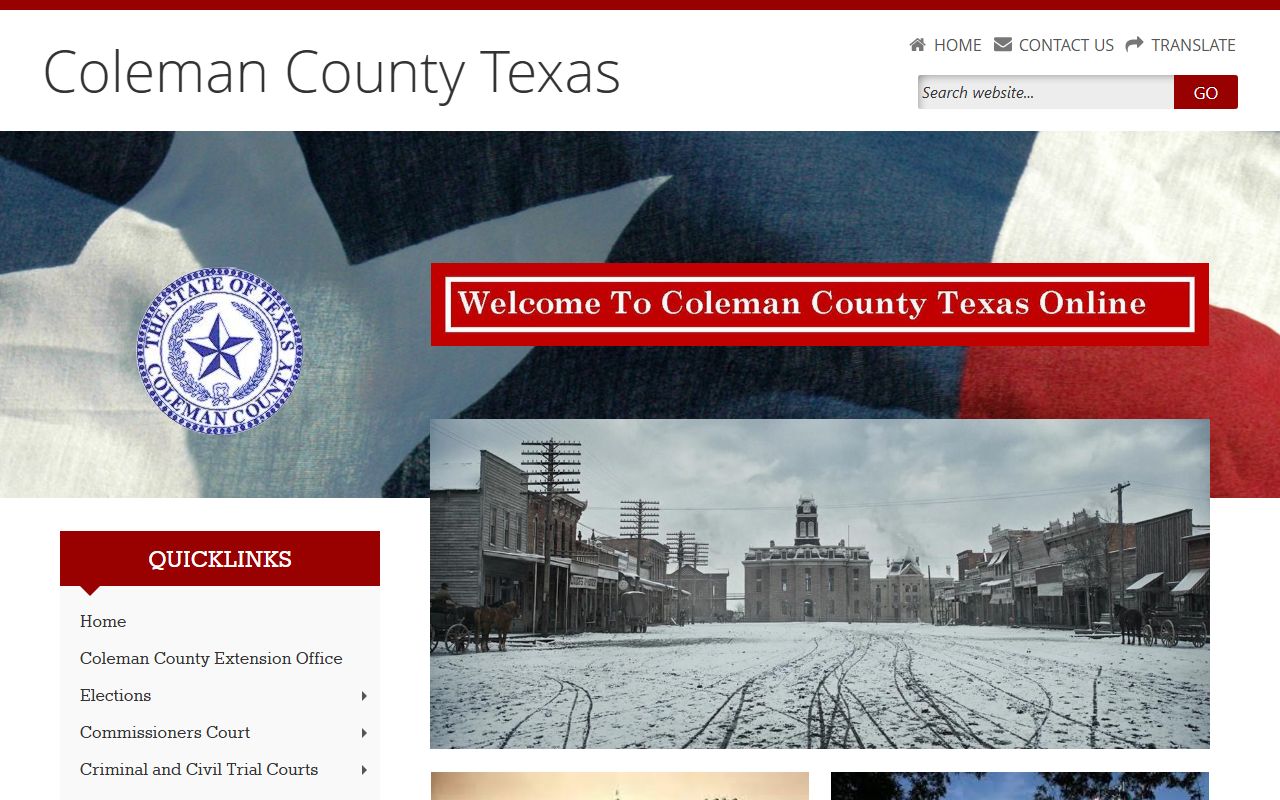
The Coleman County Courthouse in Coleman houses the clerk's office, district court, and related county departments. Records on file there cover decades of property ownership and can be useful when trying to identify the source of unclaimed royalties or verify heirs for a claim.
Coleman County has ranching and some oil and gas activity in the Central Texas region. Mineral royalties from wells in the area sometimes accumulate in the unclaimed property program when the royalty owner moves or passes away. The Texas Railroad Commission at rrc.texas.gov has records on wells and leases in Coleman County.
Types of Unclaimed Property in Coleman County
Dormant bank accounts and uncashed payroll checks are the most common property types in the state program. Under Texas Property Code § 72.1015, wages go presumed abandoned after just one year without activity. That is faster than the three-year rule for most other property. A final paycheck from a Coleman-area employer can reach the state program quickly after going uncashed.
Insurance proceeds are worth checking too. Life policies from deceased relatives that were never claimed end up in the program when the insurer cannot locate the beneficiary. Search under the full names of deceased family members who lived in Coleman County. Some of these policies were taken out decades ago and have been in the database for years.
Under Texas Property Code § 76.201, Coleman County may also hold small amounts of unclaimed property valued at $100 or less separately from the state program. Contact the county treasurer for details on any locally held funds.
Safe deposit box contents, stock dividends, utility deposits, and court deposits also show up in the state program. A $0 value listing means the state holds a physical item. You still have full rights to claim it. The alternative databases page on ClaimItTexas.gov lists separate programs for pension benefits, savings bonds, and IRS refunds.
How to File a Claim
The claim process is free and starts at ClaimItTexas.gov. Find your match, select the property, and follow the steps. A Claim ID is assigned for tracking. Most claims are completed in about 90 days.
Proof of identity and proof of your right to the property are required. Small claims typically need a photo ID and proof of current address. Larger or inherited claims need more. Review the documentation requirements page before uploading. Sending wrong or incomplete documents is the most common reason for delays.
For inherited property, an Affidavit of Heirship or probate documents may be required. The Comptroller's office handles these situations routinely. Call 800-321-2274 or email unclaimed.property@cpa.texas.gov for guidance. Track progress with the claim status tool or check the FAQ page for common questions.
Note: Texas caps locator fees at 10% of the recovered amount. Claiming directly through the Comptroller is always free.
National Search Options
If you have lived in other states, those programs may hold property in your name too. Use the free national search at unclaimed.org or MissingMoney.com to cover multiple states at once. The Texas data portal at data.texas.gov also has the full Texas listing in a downloadable format.
Nearby Counties
All Texas unclaimed property claims go through the state program. Search neighboring counties if you have ties there.