
Search Bailey County Unclaimed Funds
Bailey County residents can search for unclaimed money held by the Texas state program at ClaimItTexas.gov at no cost. The Texas Comptroller holds funds reported by banks, farm co-ops, employers, and other businesses in Bailey County that could not locate the rightful owner. Muleshoe and surrounding communities are all covered. This page walks you through the search process, explains the property types most common in this South Plains county, and shows you how to file a free claim to get your money back.
Bailey County Overview
Bailey County Unclaimed Money Search
Use the ClaimItTexas.gov portal to search for any unclaimed property reported from Bailey County. The site is run by the Texas Comptroller of Public Accounts and is free to use. Type in a name, and results show any matching property on file. You can search personal names, business names, or deceased relatives.
Most property becomes presumed abandoned after three years under Texas Property Code § 72.101. At that point, the holder, whether a local bank, cotton gin co-op, or insurer, must report and remit the funds to the state. The Comptroller then holds the money without limit until a claim is filed. Agricultural counties like Bailey often have older accounts tied to families who have farmed the land for generations, making it worth searching under multiple names.
Under Texas Property Code § 74.101, holders must report property to the Comptroller by July 1 each year. That annual reporting cycle means new Bailey County property enters the state system every year.
The Texas Comptroller portal covers all Bailey County property reported by local businesses and financial institutions.

Search results include the property type, the reporting company, and the approximate value. Call 800-321-2274 for help after finding a match.
Bailey County Clerk and Local Office
The Bailey County Clerk in Muleshoe handles official county records including deed instruments and other filings. The clerk can be reached at 806-272-3044. The county website at co.bailey.tx.us has contact information for all county offices. If you are tracing a property interest connected to an unclaimed money listing, deed records at the clerk's office are a useful resource.
Bailey County is one of the leading cotton-producing counties in Texas. Agricultural payments, cotton gin credits, and co-op distributions are notable sources of unclaimed funds in this area. When a farmer moves away or passes on and checks cannot be delivered, those funds eventually reach the state program. Families with farming roots in Bailey County should search under every name that appeared on a lease, deed, or co-op membership over the years.
The official Bailey County website provides direct access to the clerk and other local offices.
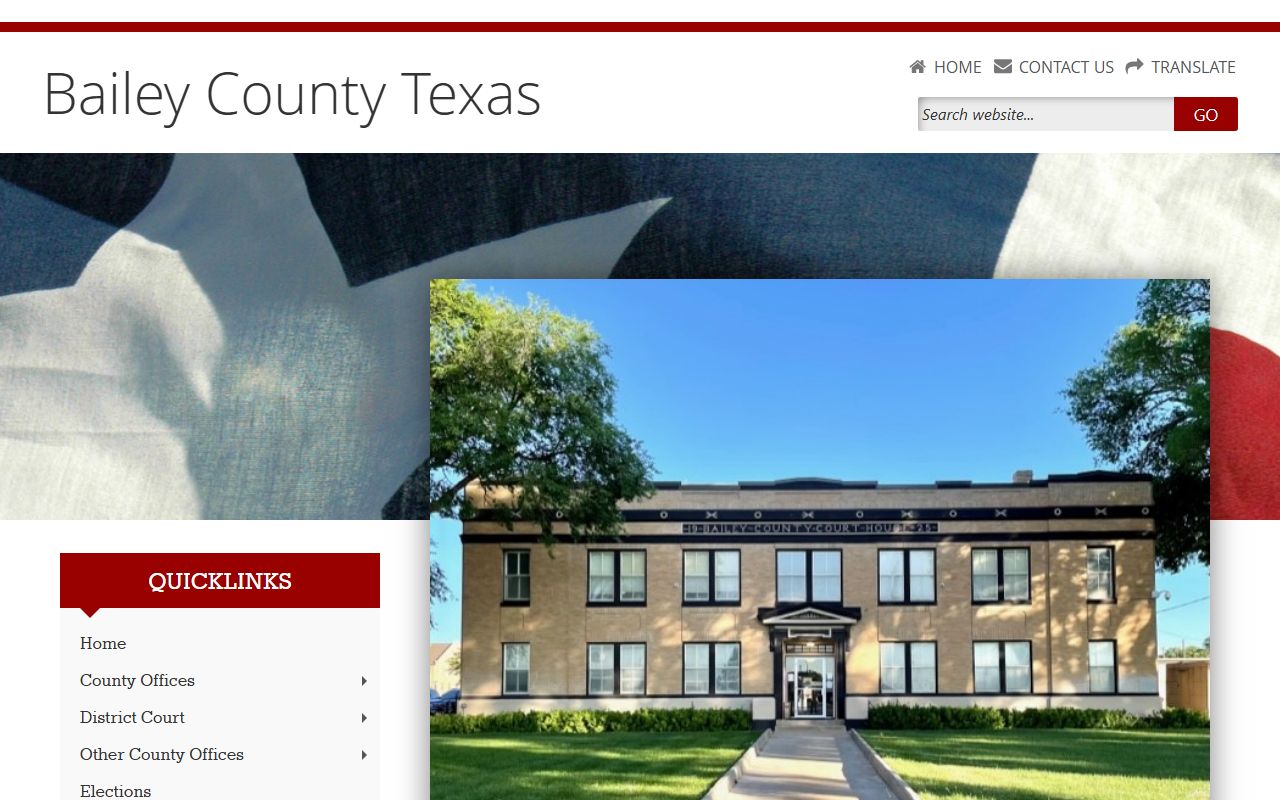
The county seat of Muleshoe is home to the Bailey County Courthouse, where the clerk records all official instruments related to land and property ownership in the county.
Texas Property Code and Bailey County
The Texas Property Code Chapter 76 governs how counties handle small unclaimed amounts. Under § 76.201, counties may retain property valued at $100 or less locally rather than transferring it to the state. Bailey County residents with small unclaimed amounts should contact the county treasurer to see if any such funds are held locally.
The three-year dormancy rule under § 72.101 applies to most property types. The one-year rule for wages under § 72.1015 applies to any Bailey County employer who could not deliver a final paycheck. Both rules operate alongside the annual July 1 reporting deadline for holders.
The Texas Property Code chapter covering these dormancy rules and reporting requirements provides the legal framework for how unclaimed funds end up with the state.
Understanding the dormancy periods helps you know when property becomes eligible for the state program and what to expect when you search.
Note: Texas law caps third-party locator fees at 10% of the recovered value. Search and file directly for free at ClaimItTexas.gov.
Common Property Types in Bailey County
Dormant bank accounts are the top source of unclaimed property in Bailey County, as they are across Texas. Checking and savings accounts that go three years without owner activity get reported to the Comptroller. Small-town banks in Muleshoe and surrounding communities often have old accounts tied to families who moved away or passed on without closing them out. Certificates of deposit that expire without renewal also follow this path.
Cotton gin credits, grain elevator payments, and other agricultural distributions are worth checking in Bailey County. Co-ops and processing facilities issue payments that do not always reach the intended recipient, especially when addresses change after harvest. These amounts can vary from small year-end balances to several years of accumulated payments if a farm changed hands.
Insurance proceeds, utility deposits, and uncashed payroll checks from local businesses are also common. Under Texas Property Code § 72.1015, wages go to the state after one year. That short window means former Bailey County workers who left without collecting a last check may already have funds waiting in the system.
Claiming Your Bailey County Funds
Go to ClaimItTexas.gov to start a claim. Select the property from your search results and follow the steps on screen. You will get a Claim ID to track your case. Most claims process within 90 days. Claiming is always free.
You need to show who you are and your right to the property. For claims under $100, a photo ID and proof of current address usually work. For larger amounts, review the documentation requirements page before submitting documents. For heir claims on behalf of a deceased person, an Affidavit of Heirship or probate documents may be needed. Email unclaimed.property@cpa.texas.gov or call 800-321-2274 for help with complex claims.
Check the status of your claim at any time using the claim status tool. The FAQ page answers common questions. National searches are available at unclaimed.org and MissingMoney.com if you have lived in other states.
Nearby Counties
The state program covers all Texas counties. If you have ties to neighboring areas, search those too.