
Denton Unclaimed Money
Denton residents may have unclaimed money on file with the Texas state program right now. The Texas Comptroller holds funds turned over by banks, employers, insurance companies, utilities, and other businesses in and around Denton that could not reach the rightful owner. That includes accounts tied to the University of North Texas, Texas Woman's University, Denton ISD, and many local employers along the I-35E corridor. This guide walks you through where to search, what types of property show up most in Denton, and how to file a free claim at ClaimItTexas.gov.
Denton Overview
Searching Denton Unclaimed Funds
The official place to search for Denton unclaimed money is ClaimItTexas.gov, run by the Texas Comptroller of Public Accounts. Type in a name and the system shows any matching property in the state program. You don't need an account and there's no fee to search. You can look up your own name, a business name, or a deceased family member's name. Results show the type of property, the company that reported it, and an approximate value.
All property reported by Denton businesses and institutions flows through this same state portal. That covers local banks, credit unions, the Denton County Transportation Authority, Texas Health Presbyterian Denton, and any employer in the area. Under Texas Property Code § 72.101, property is presumed abandoned after three years without owner contact or account activity. Once that deadline passes, the holder must transfer the funds to the state.
The City of Denton Financial Services department at cityofdenton.com may also hold small unclaimed deposits, refunds, or city-related balances separately from the state program.
The Texas Comptroller search is where you should start. It's free, fast, and covers the widest range of property types.
The screenshot below shows the ClaimItTexas search portal. The official Denton unclaimed property search is available at no charge.
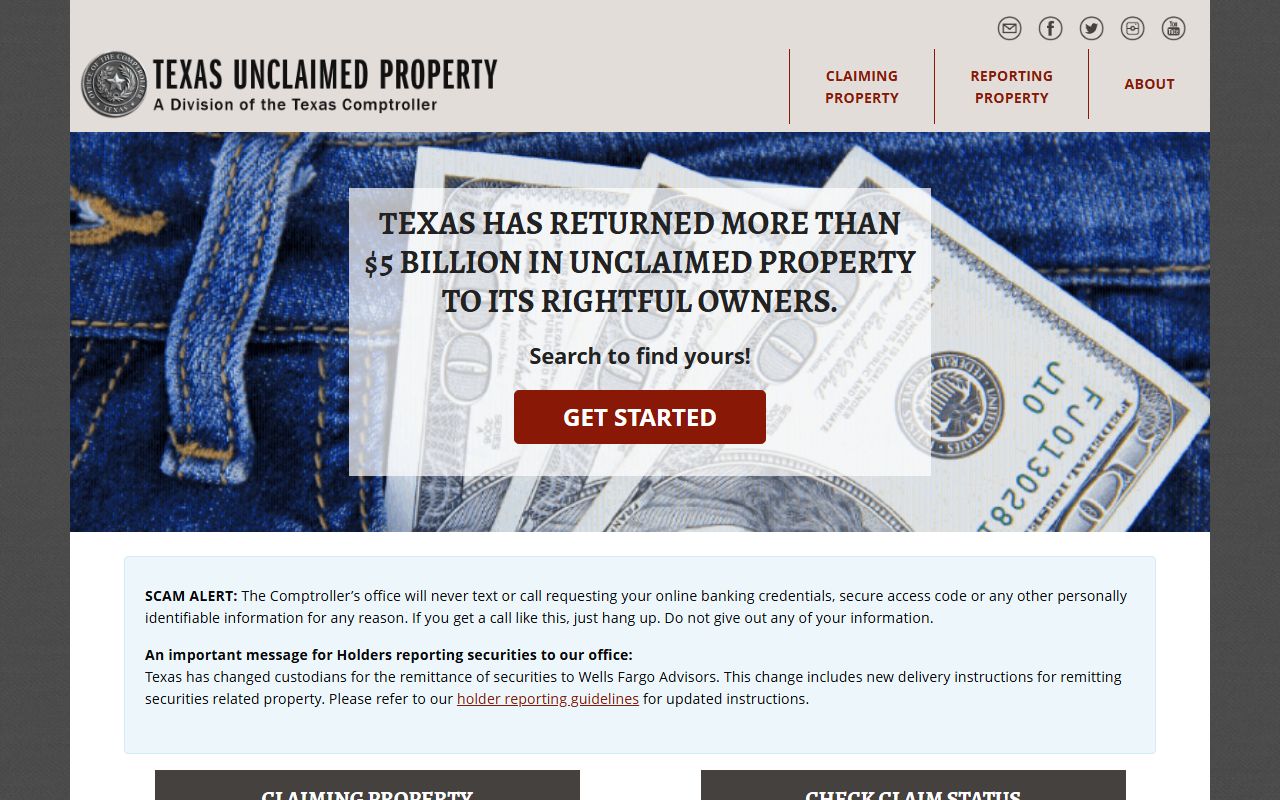
Once you find a match, you can begin the claim right from the search results page or call the Unclaimed Property Division at 800-321-2274.
Denton Local Resources
Denton is home to two major universities, and both generate unclaimed property. The University of North Texas and Texas Woman's University regularly report uncashed refund checks, overpaid tuition balances, and payroll items to the state program. If you or a family member attended or worked at either school and moved without leaving a forwarding address, a check may have been returned and eventually turned over to the Comptroller. Search under every name variation you have used, including maiden names.
The City of Denton operates its own financial services division that handles city-issued refunds, deposits, and payments. If you had a utility account in Denton that was closed, a deposit may have been held and later reported to the state. The city's finance page at cityofdenton.com can confirm current city-held balance inquiries. For county-level records and resources, the Denton County government site at dentoncounty.gov covers everything from court records to official county contacts.
Denton ISD and the Denton County Transportation Authority also show up as reporting institutions. Employer-issued payments, refunds, and uncollected wages from any of these local entities can all end up in the state program.
The screenshot below shows the City of Denton official page. The City of Denton website is a good starting point for city-level resource inquiries.
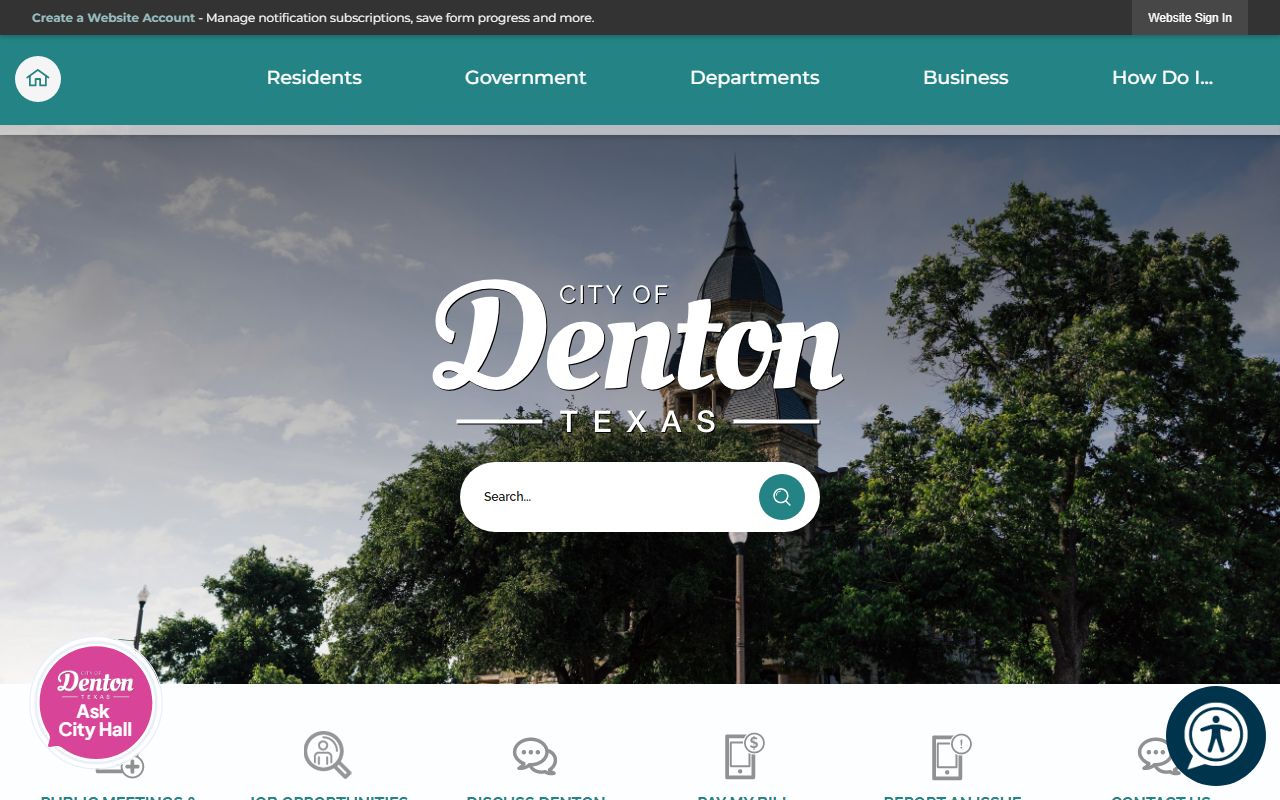
City staff can help confirm whether a specific deposit or balance was reported to the state or remains on file locally.
Note: Search under business names as well as personal names if you owned or operated a business in Denton. Corporate accounts and business-related deposits are reported to the state and can be claimed by the authorized representative.
Types of Unclaimed Property in Denton
Denton's profile as a university city means student-related unclaimed property is more common here than in many other Texas cities. Tuition refunds, housing deposit returns, financial aid overages, and student employee paychecks all end up in the state program when the school can't reach the recipient. These amounts are often small, but they are worth checking, especially if you or a child attended UNT or TWU years ago and may have moved several times since.
Beyond university accounts, the common types are dormant bank accounts, uncashed personal checks, utility deposits, and life insurance policy proceeds. Under Texas Property Code § 72.1015, wages and payroll are presumed abandoned after just one year without owner activity. That is a much shorter window than the standard three-year rule. If you ever worked in Denton and didn't receive your final paycheck or a bonus check, that amount may already be in the state program waiting to be claimed.
Safe deposit box contents, stock and mutual fund shares, court-held deposits, and trust account balances can all end up in the state program too. If the value listed on a property is $0, that typically means the state holds a physical item rather than cash. You have the same right to claim it.
For property types that go to separate agencies rather than the Comptroller, including pension funds, savings bonds, and IRS refunds, the alternative databases page on ClaimItTexas.gov lists exactly where to look.
Filing an Unclaimed Money Claim from Denton
The claim process is free and starts at ClaimItTexas.gov. Search your name, find a match, select the property, and follow the steps on screen. The system issues a Claim ID you can use to track your case going forward. Most claims are processed within 90 days.
You will need to show proof of who you are and that you have a right to the property. For small claims under $100, a government-issued photo ID and proof of your current address are generally enough. Larger claims or more complex property types will need more documentation. The documentation requirements page breaks it down by property type. Submitting the right documents the first time avoids delays, so take a few minutes to review that page before you upload anything.
For claims on behalf of a deceased person, you may need an Affidavit of Heirship or probate documents depending on the estate value and property type. The Comptroller's staff handles these regularly. If you're unsure what to submit, call 800-321-2274 or email unclaimed.property@cpa.texas.gov before starting the claim.
Track your claim at any point using the claim status search tool. The FAQ page covers common questions about specific property types, $0 values, and what happens with stock shares the state receives.
Note: Texas law caps locator fees at 10% of the recovered value. You can always file on your own at no cost, so there's no reason to pay more than that to any third party.
National Search Resources
Denton is a college town with a lot of turnover. Many people come for school, live here a few years, and move on. That means former Denton residents may have unclaimed property in Texas but current residents may have funds sitting in other states where they lived before arriving. Don't stop at ClaimItTexas.gov if you have lived elsewhere.
The free national search at unclaimed.org, run by the National Association of Unclaimed Property Administrators, searches multiple state databases at once. MissingMoney.com is another free multi-state tool. Neither charges to search or claim. Both are legitimate government-affiliated resources.
The Texas open data portal at data.texas.gov also has a downloadable unclaimed property listing. It covers the same records as ClaimItTexas.gov but in a format you can filter and sort offline. This can be useful if you want to search multiple family members at once or do a bulk check of a common last name.
The screenshot below shows the Denton County official site. The Denton County government portal has contact info for all county offices that may hold or track local property records.
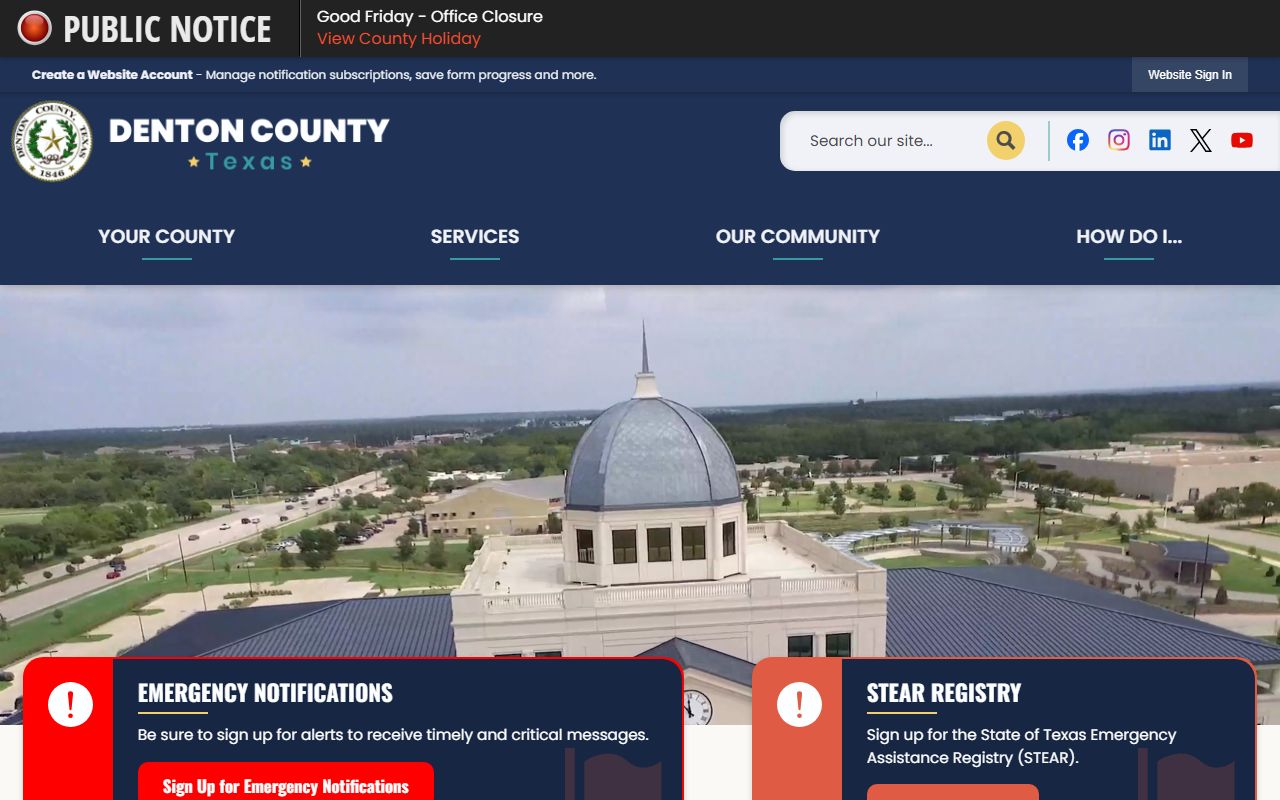
County records can help confirm property ownership history, which is useful when tracing unclaimed funds tied to real estate or mineral interests.
Nearby Cities
Unclaimed property claims are handled at the state level regardless of which Texas city you live in. If you have ties to nearby cities, search those areas too.